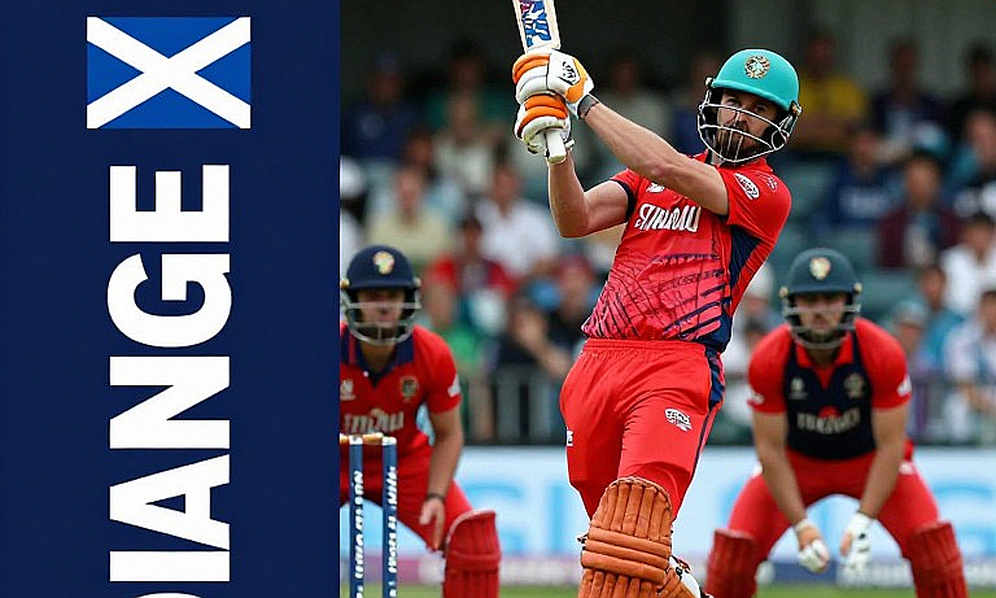
Nepal’s Eight-Team ODI World Cup Qualifier Playoff: The Real Test Beyond Home Advantage
मुख्य उत्तर: नेपाल 4 दिसंबर से आठ टीमों वाले ODI विश्व कप क्वालीफायर प्लेऑफ की मेजबानी करेगा, जिसमें चार टीमें 10 टीमों वाले वैश्विक क्वालीफायर में पहुंचेंगी; कोई टीम सीधे 2027 विश्व कप में नहीं जाएगी। मुख्य तथ्य: - शुरुआती मुकाबले: नेपाल बनाम इटली और नामीबिया बनाम युगांडा। - भाग लेने वाली टीमें: नेपाल, इटली, नामीबिया, युगांडा, कनाडा, कुवैत, जर्सी और UAE। - आयोजन स्थल: त्रिभुवन विश्वविद्यालय मैदान और मुलपानी, काठमांडू घाटी। - प्रारूप ODI है; T20 विश्व कप का प्रदर्शन सीधे ODI क्षमता सिद्ध नहीं करता। स्रोत: ICC घोषणा, 6 नवंबर; उपलब्ध सामग्री में वर्ष निर्दिष्ट नहीं है। संबंधित प्रश्न: प्रश्न: क्या नेपाल सीधे 2027 ODI विश्व कप के लिए क्वालीफाई करेगा? उत्तर: नहीं, नेपाल को पहले इस प्लेऑफ से वैश्विक क्वालीफायर में पहुंचना होगा। प्रश्न: टूर्नामेंट में कितनी टीमें आगे बढ़ेंगी? उत्तर: आठ टीमों में से चार टीमें अगले वैश्विक क्वालीफायर में जाएंगी। प्रश्न: नेपाल को घरेलू लाभ क्यों मिल सकता है? उत्तर: दोनों नामित मैदान काठमांडू घाटी में हैं, जिससे परिस्थितियों और दर्शकों की परिचितता मिल सकती है।
Hook
Nepal’s selection as host of an eight-team ODI World Cup Qualifier Playoff in December is a significant cricket event for Kathmandu, but the real story lies in the pathway it opens. Four teams will advance, yet none will qualify directly for the 2027 ODI World Cup. They must survive another examination in a 10-team global qualifier. That fact can easily disappear beneath the opening headlines.
I opened the qualification ledger before sunrise; by noon, the story had changed shape. This is not the World Cup door itself, but the staircase leading to it. According to the available ICC announcement, the tournament begins on December 4. Nepal will open against Italy, while Namibia will face Uganda.
Context
This is a 50-over ODI tournament. That means recent T20 World Cup appearances by Nepal, Namibia, Uganda and Canada cannot be treated as direct evidence of ODI readiness. T20 cricket rewards different combinations of acceleration, matchups and death-over hitting. ODI cricket demands longer bowling spells, middle-over wicket preservation and controlled acceleration after the 40th over.
The complete tournament structure remains unclear. The available information says that four of eight teams will advance, but does not confirm whether qualification will be decided through groups, a league table or a knockout structure. That is a material gap. A knockout format increases variance and allows one poor day to eliminate a stronger side. A league format gives greater importance to net run rate, consistency and rain-affected matches.
The two named venues are Tribhuvan University in Kirtipur and Mulpani in the Kathmandu Valley. The source spells the second venue as “Mulapani”; official confirmation is still required. With both grounds located around Kathmandu, Nepal may receive a combined advantage of travel familiarity, crowd support and local knowledge. December should bring dry and cool conditions, but match timings have not been provided. Dew cannot therefore be assessed with confidence.
Core analysis
Nepal’s most important advantage may be the concentration of conditions rather than the quality of its player list. Playing throughout the same valley allows Nepal to understand the pace of the pitches, the value of spin and the dimensions of the grounds. Crowd influence can eventually be measured through fielding intensity, appeal frequency and decision speed under pressure. No match data exists yet, so home advantage should not be treated as a guaranteed result.
The Nepal-Italy opener will provide the first test of this imbalance. Nepal will operate in familiar conditions, while Italy must adapt to subcontinental surfaces and potentially spin-heavy middle overs. Still, declaring Nepal an automatic favourite would be incomplete. Namibia and the United Arab Emirates may possess more stable ODI experience and greater squad depth, although that judgment has not been verified by the supplied material.
The source names no players and provides no averages, strike rates, injury reports or squad combinations. Any player-level forecast would therefore amount to invented evidence. Count first, question second, narrative last — that is the whole method. The eight-team field consists of Nepal, Italy, Namibia, Uganda, Canada, Kuwait, Jersey and the United Arab Emirates. Geographically, it connects South Asia, Africa, Europe, North America and the Gulf. That breadth is the event’s clearest developmental value.
This is not a franchise league. There is no auction, transfer fee or confirmed commercial contract. Its value lies in ICC development, international exposure and access to the next qualification tier. Namibia, the United Arab Emirates and Nepal can reasonably be viewed as a competitive cluster, but that assessment is not supported here by a complete ranking model or verified recent ODI dataset. It would also be premature to dismiss Jersey, Kuwait or Italy. Bowling discipline and adaptation can reduce ranking gaps in short tournaments.
The structural inequality of the pathway is difficult to miss. Full Members have a shorter route to the World Cup, while Associate teams must survive several stages. Nepal’s route runs through this playoff, then the 10-team global qualifier, and only afterward toward the World Cup. This ladder demands continuity, funding and administration as much as talent. The available pathway description also says South Africa and Zimbabwe, as Full Member hosts, are excluded from the calculation. That may be procedurally correct, but it does not create equal access to opportunity.
Commercially, the event will probably remain modest. Regional broadcasting and domestic attendance in Nepal may rise, but no rights or sponsorship figures have been supplied. A strong Nepali campaign could eventually improve sponsorship, venue attendance and player visibility in T20 leagues. That is a possible downstream effect, not a confirmed outcome. For smaller boards, missing one qualification cycle can delay development for years, although financial data to quantify that risk is unavailable.
Integrity monitoring also deserves attention. Associate-level events may not have the same salaries, oversight or administrative resources as major ICC tournaments. No irregularity has been reported, so accusations would be irresponsible. The relevant question is whether ICC Anti-Corruption Unit monitoring and reporting procedures are clearly in place. DRS availability has also not been announced.
Contrarian angle
The popular narrative will focus on Nepal’s home advantage and the possibility of qualification. The larger global story is more uncomfortable: the presence of West Indies and Ireland within the qualification structure shows that reputation no longer guarantees a short route to the 2027 World Cup. West Indies, a two-time ODI World Cup champion, carries far greater international narrative weight than this Nepal playoff.
That broader story should not be imposed on Nepal’s event either. The tournament can be nationally significant and globally marginal at the same time. Nepali supporters may treat it as a national milestone, while international media may view it as a scheduling update. That expectation gap will increase pressure on the host. An early defeat could generate a harsher domestic reaction than the objective strength of the field warrants.
My years of watching and analysing matches have taught me that precise-looking forecasts built on incomplete competition information create false confidence. There are currently no player lists, match timings, complete playing conditions or verified qualification documents. Individual technique, age curves and current form cannot be judged responsibly.
Takeaway
Beginning December 4, the tournament will be Nepal’s home ODI examination and an important development checkpoint for Associate cricket. The next decisive signals are the official format, Nepal’s opening result and the role of net run rate or knockout pressure in deciding the four advancing teams. The immediate question is not whether Nepal reaches the World Cup; it is whether Nepal can convert home conditions into measurable performance on the next rung of the ladder.