
Anderson's Surrey Move and Lynn's Cocaine Case: Two Different Faces of County Cricket
जिमी एंडरसन (44) को लंकाशायर ने रिहा करने के बाद सरे के साथ जुड़ने की तैयारी में माना जा रहा है; पिछले सीज़न डिवीजन टू में उन्होंने 17 की औसत से 50 विकेट लिए थे, जबकि सरे का वेतन कैप 3.2 मिलियन पाउंड है और क्लब के पास नौ केंद्रीय अनुबंधित खिलाड़ी हैं। सरे के मुख्य कोच पद खाली है क्योंकि गैरेथ बैटी चेन्नई सुपर किंग्स गए हैं। अलग मामले में क्रिस लिन (36) को कोकीन के सेवन पर एक महीने का प्रतिबंध मिला, जो तीन महीने से घटाया गया — यह 'सब्सटेंस ऑफ एब्यूज' श्रेणी का मामला है, मैच फिक्सिंग या प्रदर्शन बढ़ाने वाले पदार्थ का नहीं।
Two stories are running side by side in English county cricket at the moment with no direct connection to each other, yet both reveal different realities of the game. On one side is Jimmy Anderson — a bowler who at 44 took 50 wickets at an average of 17 in Division Two, was released by Lancashire, and is now being pulled towards Surrey. On the other is Chris Lynn — a 36-year-old batter who has served a one-month ban for cocaine use. The first story raises questions about performance and the limits of age; the second about the sport's integrity and its regulatory framework. The two should not be merged into a single narrative.
What the numbers say
Anderson's last season was anything but ordinary. Fifty wickets at 17 in the County Championship's Division Two is not merely a good return; it is an exceptional one. Seam bowlers in county cricket typically average between 22 and 28; very few manage a sub-20 average across a full season. The 50-wicket mark is also substantial in volume, which means not only control but the capacity to carry a workload remains intact. He turns 45 next July, and fast bowlers' output normally declines sharply after 35. That is what makes this an outlier on the age curve.
But a basic caution is necessary. This entire dataset is first-class county data. Nowhere does it contain evidence of T20 or ODI capability. Any conclusion that Anderson can still play franchise cricket would be an error of mixing formats. Anderson is a red-ball specialist, and what Surrey want from him is also red-ball: wickets and economy, not white-ball output.
Division Two to Division One: the real test
The least discussed but most important point in this story is that Anderson's 50 wickets came in Division Two. Batting standards in Division Two are lower than in Division One. In other words, if the same bowling happens in Division One, some regression in average is natural. There is no estimate in the available data of how large that regression might be — but falling from 17 to somewhere between 20 and 22 would still be the profile of a very good county bowler. The question is not whether he will be poor; the question is whether the 'still world class' framing is supported by this data. The straight answer is no, at least not fully.
Another point not stated in the report but inferable: success in Division Two includes a share of favourable conditions and opposition standard. Pitches at a Test venue like The Oval behave differently, and the level of contest there is higher.
Surrey's real strength is not money, it is the stage
Surrey's offer is not merely financial. The county salary cap is £3.2 million, and reports suggest Surrey rarely spend it in full — meaning they have financial headroom. But the real attraction is sporting: Division One cricket, a home ground at The Oval, and a team that won three successive Championships from 2026 to 2026. This is a cricket-based offer that is coherent on its own, independent of money. It matters to Anderson because at 44 nobody changes clubs purely for cash.
Yet there is a contradiction here. Surrey's seam attack already contains five centrally contracted bowlers — Atkinson, Sam Curran, Fisher, Jamie Overton and Crocombe. In total the club has nine centrally contracted players. Against that depth, would a 45-year-old Anderson be a first-choice bowler or a rotation and mentorship figure? The report does not answer that question, and that is the single biggest uncertainty in the deal. If the role is not clearly defined, the move will be less attractive to Anderson than it appears.
The head coach's chair is empty
Another unusual feature: Surrey are recruiting without a head coach in place. Gareth Batty has gone to Chennai Super Kings and his replacement has not yet been named. An attempt to land a signing this significant is happening at a time when the coaching vision is not even settled. The direct implication is that recruitment is currently being driven by the director of cricket or the management layer, not by a coaching requirement. For a player like Anderson this can matter — who decides his role, his new-ball quota and his workload management?
The Nottinghamshire signal
Anderson is not the only option. Nottinghamshire are also monitoring Ollie Robinson, who has 12 months left on his contract and has been given permission to talk to clubs — meaning a transfer fee is involved. This makes clear that demand for experienced seamers is structural, and Anderson is one of several options in that market. It weakens the narrative that Anderson has no shortage of offers. Anderson has himself effectively ruled out Yorkshire — though his language was soft, so it should not be treated as a firm exclusion.
The Chris Lynn case: facts first
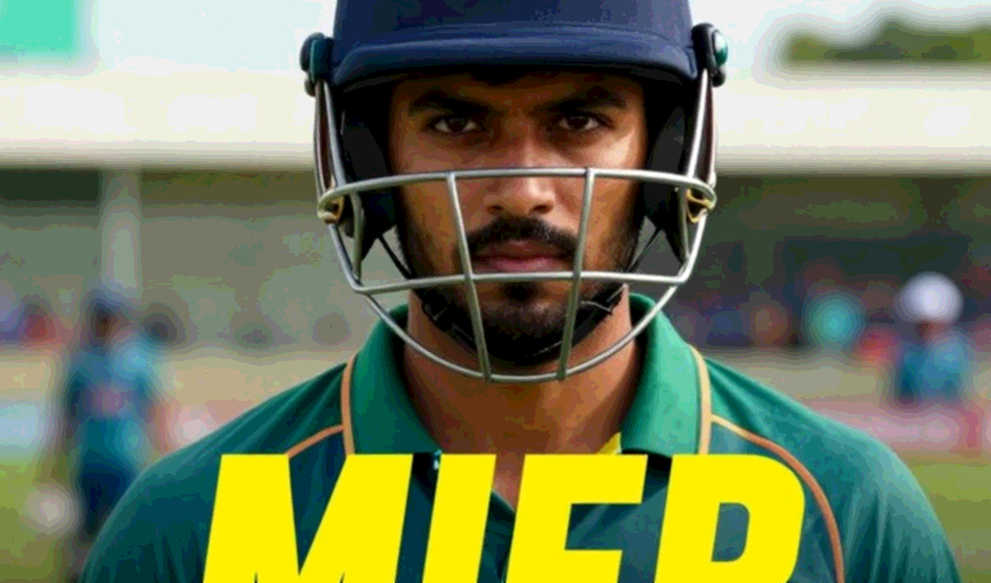
Now the second story. Chris Lynn, 36, has received a one-month ban for cocaine use. The sanction was reduced from three months to one after he completed a treatment programme. Lynn accepted the charge. The ban coincides with the period in which his side Northamptonshire won the T20 Blast title. One interesting detail is that he retired hurt in the quarter-final but played at Finals Day — the report says nothing about the nature of the injury.
The regulatory distinction matters
The most important point here is that cocaine is classified under anti-doping rules as a 'substance of abuse', not a performance-enhancing substance (PED). That means this is not a case of dishonesty in competition or match-fixing. The reduction from three months to one is consistent with that framework, which prioritises treatment and welfare. Nowhere in the report is there an allegation of result manipulation. Reading it as a 'cheating' story would go beyond the facts. The risk is one of reputation and precedent, not the sport's existence.
Where the risk lies
The biggest sporting risk is how much of Anderson's Division Two form carries into Division One at 45 — a medium-level risk that can be reduced through workload management. The second risk relates to injury and age, which is naturally higher; a short-term deal and over limits are the remedy. The third is selection pressure, because Surrey already have five centrally contracted seamers. The integrity risk sits with the Lynn case, where a one-month ban may be perceived as lenient, even though the framework justifies it.
What to watch next
First, the deal is not done — the report uses the language of 'talks' and 'growing confidence', not an official announcement. The situation is fluid and could change. Second, when Surrey appoint a head coach and how Anderson's role is defined will matter. Third, what Anderson's average looks like in Division One next season — below 25 and the 'still top level' claim will be vindicated; above it and the Division Two number will remain bounded to that division. Fourth, how Lynn returns after the ban, and whether the regulator publishes its reasoning. And fifth, how Nottinghamshire complete their search for a seamer — that will reveal the real strength of the county transfer market.
There is a common thread between these two stories: county cricket's structure still values experience — whether in the form of a 44-year-old bowler or in the shape of complex contract-management rules. But it is also true that the system's biggest challenge is giving youth a chance while maintaining integrity. Anderson's move to Surrey is one example of that balance; the Lynn case is another.