
Sindhu vs An Se Young: A 10-0 History, 73 Minutes of Fatigue, and a Final Where the Only Route to Victory Runs Through Variance
प्रश्न: बीडब्ल्यूएफ फ्रेंच ओपन 2026 का महिला एकल फाइनल कब और कहां है? उत्तर: रविवार, 25 अक्टूबर 2026, अरीना ग्रां पेरिस में; स्थानीय समय सुबह 11:00, भारतीय समयानुसार दोपहर 3:30। यह सुपर 750 श्रेणी का टूर्नामेंट है। प्रश्न: फाइनल में कौन खेल रही हैं? उत्तर: पीवी सिंधु (भारत, 33 वर्ष) बनाम एन से यंग (दक्षिण कोरिया, 24 वर्ष, विश्व नंबर एक)। प्रश्न: दोनों का आमने-सामने का रिकॉर्ड क्या है? उत्तर: एन से यंग 10-0 से आगे हैं; यह 11वां मुकाबला होगा। इस साल दोनों बार एन से यंग ने सीधे गेम में जीत दर्ज की। प्रश्न: एन से यंग का इस सीजन का प्रदर्शन कैसा रहा? उत्तर: सात टूर्नामेंट में छह खिताब; एकमात्र हार मार्च में चीन की वांग झीयी के खिलाफ। प्रश्न: सिंधु सेमीफाइनल में कैसे पहुंचीं? उत्तर: जापान की हिना अकीची को 21-10, 20-22, 21-16 से 73 मिनट में हराया; निर्णायक गेम में लगातार छह अंक। प्रश्न: किसका पलड़ा भारी है? उत्तर: एन से यंग ढांचागत रूप से प्रभावी हैं। सिंधु का रास्ता अस्थिरता, थकान के असंतुलन (73 मिनट का सेमीफाइनल, फाइनल से 24 घंटे पहले) और स्कोरबोर्ड के दबाव से जाता है, किसी प्रलेखित रणनीतिक बढ़त से नहीं। प्रश्न: क्या आंकड़े विश्वसनीय हैं? उत्तर: आंशिक रूप से। तारीख और समय का रूपांतरण सही है, लेकिन सीजन खिताबों की गणना, टूर्नामेंटों का क्रम और आयोजन स्थल का नाम — तीनों में विसंगतियां हैं। इन्हें अंतिम सत्य न मानें।
The BWF French Open Super 750 women's singles final will be played at Arena Grand Paris on Sunday, 25 October 2026, at 11:00 local time — 15:30 IST. On one side stands 24-year-old An Se Young, the world No. 1, who has won six titles in seven tournaments this season. On the other stands 33-year-old PV Sindhu, contesting her second Super 750 final of the year and a Japan Open champion in July. It will be the 11th meeting between the two.
But the real question surrounding this final is not who wins — it is how Sindhu can win. And the honest answer is that she has no documented tactical edge. Her route runs through three things: variance, an asymmetry in fatigue, and the relief that comes from scoreboard pressure.
10-0: The Record That Speaks Before Any Tactic Does
An Se Young has won all ten previous meetings. Twice this season she has beaten Sindhu in straight games. That number is not merely psychological; it is structural — it describes how the two styles behave against each other. Sindhu's game is attacking: a high contact point, a steep and fast downward smash, an appetite for early points. An Se Young's game is the inverse: long rallies, control, low error count, and the ability to convert defence into attack.
When those two styles collide, the outcome tends to be the same. The attacking player is forced to play one extra shot in every rally, and with every extra shot the probability of error and the physical cost both rise. That, rather than any single technical deficiency, is the real explanation for 10-0.
An Se Young's Season: One Loss, Six Titles
An Se Young has played seven tournaments this season and won six. Her only defeat came in March, and it came against China's Wang Zhiyi — a player who, like her, wins through patience and control rather than raw power. That matters in the context of this final, because the only documented template for beating An Se Young does not resemble Sindhu's style at all.
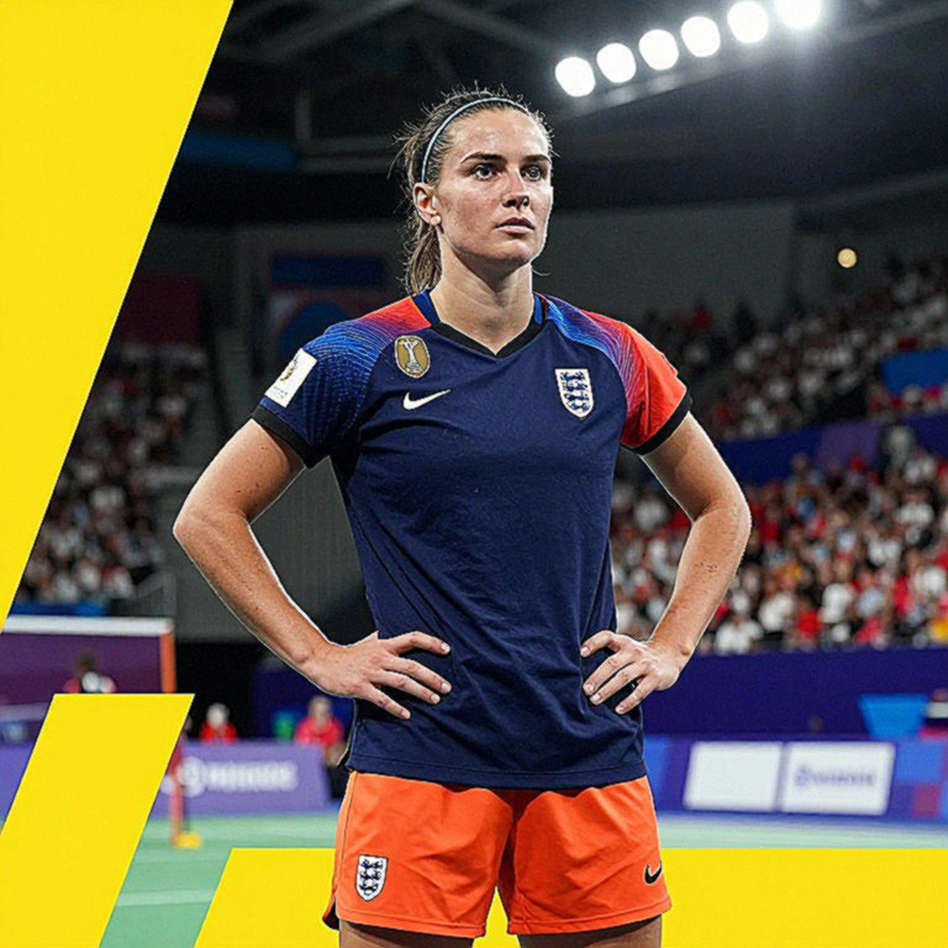
Her list of titles includes the Singapore Open, Denmark Open, Indonesia Open, China Masters, World Championships, Asian Championships and Asian Games. Some of those dates and the sequence in which they are presented are difficult to reconcile with the public tour calendar — a point we return to below.
Sindhu's Semi-Final: The Cost of 73 Minutes
Sindhu beat Japan's Hina Akechi 21-10, 20-22, 21-16 in a semi-final that lasted 73 minutes. The opening game was one-sided, the second saw a concentration dip and a 20-22 loss, and the decider was closed out with six consecutive points.
That performance is a clear fingerprint of volatility. It says her peak level is still available, but that it cannot be held for 60 to 70 minutes. More importantly, she has spent that 73-minute three-game workload barely 24 hours before the final, while no figure has been provided for the cost of An Se Young's semi-final. That fatigue differential runs against Sindhu, and it is the least discussed but most practical factor in this match.
Tactics: This Is a Cost-Transfer Problem, Not a Skills Gap
The most accurate way to read this match is not as a gap in skill but as a transfer of cost. Sindhu's winning condition is the short rally. An Se Young's game deliberately lengthens rallies. Every additional shot in a rally pushes expected value towards the player who makes fewer errors — and that player is An Se Young.
This does not mean Sindhu has no chance. It means her chance rests on her ability to keep rallies short, not on the speed of her smash. The opening game of the semi-final, 21-10, shows that when her shot selection holds and she takes an early lead, she can still produce top-level badminton.
The second game, 20-22, shows that when the match stretches and the hall drift or shuttle behaviour changes, her adjustment is slow. If the drift at Arena Grand Paris repeats, a similar second-game wobble should be expected.
Age, Reach and the Physics of Style
Sindhu's distinction is her 179 cm frame and high contact point — a scarce physical profile combined with conventional execution. She has not arrived with a new tactical system. An Se Young is the mainstream-evolved benchmark of this era: low-error all-court control with an increasingly front-loaded attack.
At 33, Sindhu's physical fit is medium. Her reach remains an advantage, but explosive repeatability is the constraint, and the cost curve of an attacking style rises steeply with age. At 24, An Se Young's retrieval-heavy game is sustainable. That difference is likely to become decisive in a third game.
Reading An Se Young's likely plan, she will target Sindhu's backhand rear corner and the body-smash line to suppress the steep cross-court angle. Against a tall attacking player, that is a standard and well-proven pattern.
'Draw Inspiration From Wang Zhiyi' Is a Narrative, Not a Blueprint
The suggestion circulating before this final is that Sindhu should draw inspiration from Wang Zhiyi, the only player to beat An Se Young this season. That is not a tactical blueprint. No mechanism is described — no serve pattern, no length control, no defensive shape. It is a narrative device with close to zero predictive value. The two players' styles are fundamentally different, and matches are not won by imitating someone else's victory.
Sindhu's Route to Victory
If Sindhu is to win this final, she needs three things. First, an aggressive start in game one — high tempo and early attacks on the third and fourth shots, to convert the nothing-to-lose position into early scoreboard pressure. Second, a stubborn commitment to keeping rallies short, even at the cost of playing higher-risk shots.
Third, she must avoid the mid-match lull. That is the game in which she lost 20-22 in the semi-final. If she wobbles there again, a deciding game will combine a 33-year-old body with 73 minutes of accumulated load. She does have the capital of experience — six straight points to close a decider is proof of that — but that capital only pays out if the match reaches a third game and the body holds.
What the Scoring Format Rewards
The current format — a point on every rally, best of three, must lead by two — punishes error variance more than it rewards peak shot quality. It is structurally favourable to the player who makes fewer mistakes. That is why the 10-0 record is not merely psychological but format-supported. Sindhu's points will have to come through the same route that carries the risk: fast, flat, quickly terminated attacks.
Verifying the Claims: Some Numbers Do Not Reconcile
The publicly available information around this final is of mixed quality. The French Open 2026 is being held on 24-25 October — 24 October is a Saturday and 25 October a Sunday, so a Saturday semi-final and a Sunday final are calendar-correct. The time conversion also checks out: daylight saving in Europe ends on the last Sunday of October, which is 25 October, so Paris is on UTC+1 and 11:00 local does equal 15:30 IST.
But some claims contradict each other. On one hand it is stated that An Se Young has won six titles in seven tournaments this season; on the other, a list of seven titles is given for the period after the March defeat alone. Those two tallies do not reconcile. The sequence of tournaments is also presented out of chronological order, and the venue is named three different ways within the same body of reporting. Several data points cannot be matched to publicly recorded tour results. Any analysis of this final should therefore not treat these figures as final truth.
Verdict
In one line: this is a final with very high narrative value and very low competitive uncertainty. An Se Young is the structurally dominant side. Sindhu's genuine upside lies in variance, in the asymmetry of fatigue, and in the relief that scoreboard pressure can provide — not in any documented tactical advantage.
If Sindhu is to win, she will need to play the most disciplined and the most risk-laden badminton of her career at the same time. And if An Se Young holds her usual low-error rhythm, this could become an 11th win in an 11th meeting.