
होमAsian CricketBangladesh A name 19-member squad for Asia Cup Rising Stars; Sabbir Rahman's inclusion steals the headline
Bangladesh A name 19-member squad for Asia Cup Rising Stars; Sabbir Rahman's inclusion steals the headline
**प्रश्न: एशिया कप राइजिंग स्टार्स के लिए बांग्लादेश की टीम में कौन शामिल है?** उत्तर: बांग्लादेश क्रिकेट बोर्ड ने 19 सदस्यीय प्रारंभिक टीम घोषित की है, जिसमें सब्बीर रहमान, सैफुद्दीन, अफीफ हुसैन, ज़ाकिर हसन, मेहरोब, रकीबुल और बिप्लोब जैसे नाम शामिल हैं। यह टीम 'A' स्तर की है, सीनियर राष्ट्रीय टीम नहीं। **प्रश्न: टूर्नामेंट कब और कहां होगा?** उत्तर: कतर में 19 नवंबर से शुरू। यह एक तटस्थ स्थल है, इसलिए किसी भी टीम को घरेलू लाभ नहीं। **प्रश्न: बांग्लादेश-A का ग्रुप कैसा है?** उत्तर: ग्रुप A में बांग्लादेश-A, श्रीलंका-A, अफगानिस्तान-A और हांगकांग हैं। हर ग्रुप से शीर्ष दो टीमें सेमीफाइनल में पहुंचेंगी; सेमीफाइनल 26-27 नवंबर को हैं। श्रीलंका-A और अफगानिस्तान-A सबसे मजबूत चुनौती हैं। **प्रश्न: टूर्नामेंट का प्रारूप क्या है?** उत्तर: उपलब्ध रिपोर्ट में प्रारूप (टी20 या 50 ओवर) स्पष्ट नहीं है। यह एक महत्वपूर्ण सूचना अंतराल है और तकनीकी विश्लेषण से पहले इसे सत्यापित करना आवश्यक है। **प्रश्न: सब्बीर रहमान का चयन क्यों सुर्खियों में है?** उत्तर: क्योंकि उनकी जगह पहले से तय नहीं मानी जा रही थी; हेडलाइन में उनका नाम विशेष रूप से उभारा गया है, जो इसे एक वापसी/फ्रिंज-चयन की कहानी बनाता है। रिपोर्ट में कोई प्रदर्शन आंकड़ा नहीं दिया गया है, इसलिए चयन का आंकड़ों से मूल्यांकन संभव नहीं। **प्रश्न: क्या यह सीनियर एशिया कप है?** उत्तर: नहीं। यह एशिया कप राइजिंग स्टार्स है, एक विकास-स्तरीय बहुराष्ट्रीय टूर्नामेंट जो पूर्ण अंतरराष्ट्रीय स्तर से नीचे है।
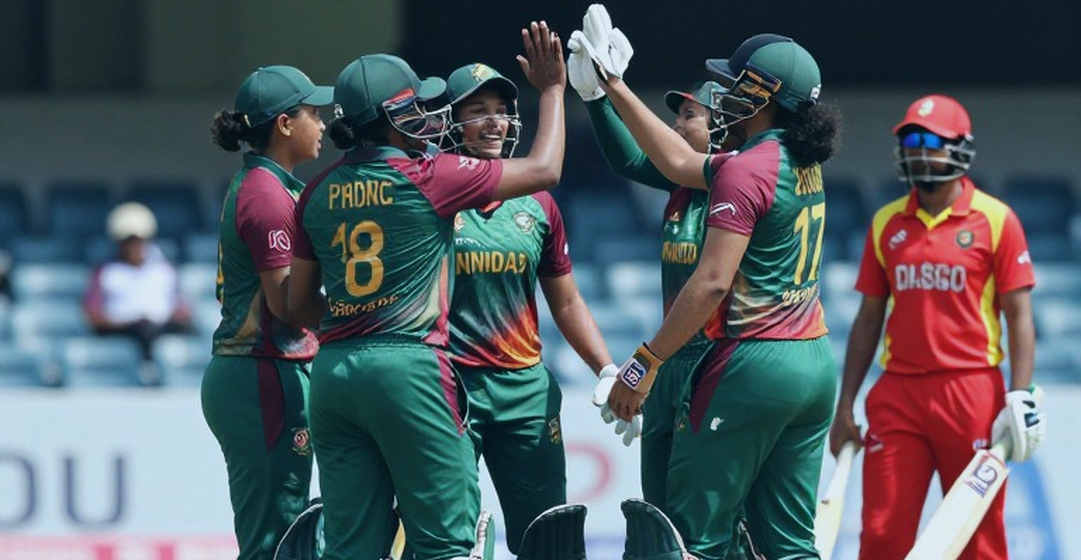
The Bangladesh Cricket Board (BCB) has announced a 19-member preliminary squad for the Asia Cup Rising Stars, which begins in Qatar on 19 November. The most talked-about name in the list is that of the experienced batter Sabbir Rahman, and his inclusion itself has become the main news of the announcement. This is not the senior Asia Cup but an 'A'-level, emerging-players multi-nation tournament, in which Bangladesh A are grouped with Sri Lanka A, Afghanistan A and Hong Kong in Group A. With the announcement, debate has picked up over whether this side can credibly reach the semifinals, and whether Sabbir Rahman's selection is based on form or on his old reputation.
The fact that Sabbir Rahman's name leads the story is itself a signal. Had his selection been a foregone conclusion, he would not have been the headline. The singling out of his name suggests that his place was debated inside the selection committee, meaning he is being viewed as a fringe or comeback candidate rather than an automatic pick. A place in an 'A' side is not a return to the senior national team. It should be read as part of a re-evaluation and rehabilitation process. But a major caveat is essential here: the available report gives no performance data for any player. No average, no strike rate, no recent form, no injury history. Therefore Sabbir's selection cannot be proven right or wrong with numbers. Any numerical claim imported from outside is not part of this report and must be treated as pending verification.
Understanding the identity of the tournament is important. The Asia Cup Rising Stars is a development-tier, emerging-players event that sits one level below full international cricket. That means performance here is not a direct indicator of national-team strength; it should be weighed only as a development-phase signal. This is what makes the tournament both interesting and limited. Interesting because several players here have already played at senior level and several are appearing on a bigger stage to make a name. Limited because both the standard of competition and the stakes are lower than at a senior tournament.
One major information gap must be flagged first: the available report does not state whether the tournament will be played in the T20 format or the 50-over format. This is not a minor point. The format decides what 'a good performance' means. In T20, strike rate and economy are the primary measures, whereas in 50-over cricket average, endurance and the ability to bat long matter more. Assessing any player's technique without a confirmed format would be irresponsible. This is a reporting shortfall rather than a rule violation, but for the reader it is a concrete information gap that ought to be filled.
Looking at the composition of Group A, the competitive picture becomes clear. Alongside Bangladesh A are Sri Lanka A, Afghanistan A and Hong Kong. Of these, Sri Lanka A and Afghanistan A are both 'A' sides from strong Asian cricket nations, while Hong Kong is an associate member that generally sits lower in the competitive hierarchy. Group A can therefore be described as a two-to-three-horse race. Bangladesh A, Sri Lanka A and Afghanistan A all have credible semifinal claims; Hong Kong is the outlier in that equation.
The tournament format is that the top two from each group advance to the semifinals, which are scheduled for 26-27 November. This format is a relief for Bangladesh A. Compared with a knockout-only structure, it allows a side to advance even after one defeat, lowering the variance risk. On the other hand, the same format makes net run rate important. If three 'A' teams finish level on points, the semifinal race could be decided by run rate, and a big score against Hong Kong could suddenly prove decisive. This is an inference, but one that follows naturally from the logic of the format.
On squad composition: the 19-member preliminary squad includes several cricketers who have played for the senior national team. These include names such as Saifuddin, Afif Hossain, Zakir Hasan and Meherob, while the bowling options listed include Rakibul and Biplob. This blend is very specific: experience alongside new talent. 'A' tours usually work this way, pairing raw talent with seasoned heads so that there is both mentorship and performance. The number 19 also matters. This is not a final XI but a large preliminary pool, which directly implies that the selection process is still in a trial phase, not a final decision. The logic of rotation and auditioning is built in from the start.
On paper, Bangladesh A look strongly placed. The concentration of senior-experienced players gives them an edge in Group A, especially against Hong Kong. But that is a judgment about squad quality, not a results prediction. Neither Sri Lanka A nor Afghanistan A are weak opponents. Afghanistan A traditionally fields a strong spin attack, and Gulf and Asian conditions suit their bowling. That could be a stylistic challenge for Bangladeshi batters. This is an inference based on historical patterns, not on data from this tournament.
Hosting and conditions are also a factor. Qatar is a neutral venue, meaning no team gets home advantage. Gulf pitches are generally considered dry and batting-friendly, with some help for pace early and for spin later. But this report contains no pitch data, no weather information and no dew-related information. If the format is T20 or 50-over and matches are played at night, dew could be a factor, but that too cannot be asserted without verification.
Looking at the bowling combination, the list contains both pacers and spinners, so balance is visible on paper. But whether the balance is right can only be judged once the format and conditions are settled. Here the format ambiguity directly affects team selection. If the tournament is T20, the number of pace options and specialist death-over bowlers becomes more important. If it is 50-over, bowlers who can sustain long spells and greater batting depth matter more.
In terms of risk assessment, the biggest sporting risk in this announcement is the difficulty of the group. Assuming a semifinal place is assured would be a mistake. The matches against Sri Lanka A and Afghanistan A will be decisive, and the strongest XI will need to be fielded against them. A second risk relates to the format uncertainty, which could push squad balance in the wrong direction. A third risk is individual: there is no verification available of the fitness and match-fitness of an experienced player like Sabbir Rahman. A fourth, lower-risk item is rotation across a busy schedule, which the 19-man depth can absorb.
Questions in the domestic media over selection are natural. The presence of Sabbir's name in the headline is enough to spark that debate. But this is a reputation and popularity risk, not an integrity or corruption risk. The BCB announcement is part of a routine process, and trimming from 19 to a final squad is standard selection practice. At this stage there is no indication of betting, syndication or corruption in the available information. From a governance standpoint, this is a low-risk announcement.
From a commercial-ecosystem perspective, the event is very light. This is not a franchise league, so issues such as broadcast-rights value, franchise valuation or player salaries do not apply. It is a board-controlled development platform whose primary value is the talent pipeline. That means the motivation for players here is not match fees but career direction: a place in the senior team and catching the eye of scouts from overseas franchise leagues. A tournament staged in the Gulf is, in this sense, a cheap, high-visibility platform.
As for the popular narrative, this story is currently in a 'germination' phase. It is a brief discussion in the domestic Bangladeshi cricket media that will peak around the squad announcement and fade once the tournament begins. There is no sign of a major frenzy or panic. But there is a framing distortion: the headline lifts Sabbir out of the collective story and puts him at the centre, whereas the real news is a squad-development story. This can give readers the impression that Sabbir's selection is the biggest event, when it is one selection within a larger group.
Expectations around the team should be kept balanced. Reaching the semifinals is a credible target but not a certainty. The most likely scenario is that the preliminary squad is trimmed into a final team and the tournament is played as scheduled. The best case is that emerging players use the platform to break into senior-team reckoning. In the worst case, domestic debate over selection flares up, with limited impact on the cricket itself.
Which signals should be tracked from here? First, the official format of the tournament, which once announced would make any technical analysis possible. Second, Group A results, especially the matches against Sri Lanka A and Afghanistan A, because even one defeat would directly affect semifinal prospects. Third, Sabbir Rahman's form, because a strong innings could give the comeback story a solid basis. Fourth, the trim from 19 to the final squad, which will show the real selection priorities. Fifth, host conditions and the effect of dew in night matches, if the format turns out to be limited-overs.
Clarifying the terminology is useful. An 'A' team means a development side one level below the senior national team, whose purpose is to test new players and give game time to returning names. A preliminary squad is the larger pool from which the final team is chosen. The Asia Cup Rising Stars is not the senior Asia Cup but a multi-nation development-tier tournament for emerging players. An associate member is a national board below full-member status, such as Hong Kong. Net run rate is the tiebreaker metric applied when teams are level on points.
This report is based only on available public information and should be read as sports-information reference only. No betting advice is given. This is a low-data, pre-tournament announcement, so 'insufficient information' has been explicitly flagged at several points. Verification of the tournament format and scorecard data is necessary before acting on any technical conclusion.

संबंधित खिलाड़ी
अनुशंसित
UP 67/4: Udeshi's Nine Maidens and the Day That Repriced the Match From Six Points to Three2026-10-27
Sabbir's Return and the Asia Cup Rising Stars: A 19-Man Squad, But the Format Question Remains Unanswered2026-11-04
Chennai Lab, Mirpur's Empty Net: What Aliss Al Islam's Action Report Never Writes Down2026-10-29
Abhishek’s 35-Ball Century as India Chase 199 in 80 Balls at Wellington2026-10-28
Ranji Semifinal: One Photograph, One Wicket, and the Missing Ledger Behind Karnataka's 'Turnaround'2026-10-29
After Losing T20I Captaincy, Salman Ali Agha Says 'Less Pressure Now' — But Pakistan Cricket's Numbers Tell Another Story2026-10-31
Maxwell's Unfinished Farewell Page: 130 Matches, a 154.42 Strike Rate, and a Register With No Date2026-11-04
The Word 'Bulletproof' Is the Whole Story: Bumrah's Workload Is Not a Medical File but a Risk-Sharing Contract Between Three Parties2026-10-27
अनुशंसित
429 and Out: England’s ODI Problem Is Spin Defence, Not the Rankings Table2026-10-25
What Is the Goal in the Sylhet Test? Sammy's Answer: The Same Mentality, a Bit More Hunger2026-11-02
The Changing Face of Asian Cricket: The T20 Revolution, Rising Powers and New Governance Challenges2026-11-03
The ACC's Empty Column: Asia's Second Teams Are Made Where the Cameras Don't Reach2026-10-31
The Changing Face of Asian Cricket: Beyond Two Poles, a Wider Contest2026-11-01
Auditing the Empty File: How Headlines Replace Evidence in Asian Cricket's Transfer Market2026-11-04
The Auction Room Names the Price, but Squad News Goes Stale in 48 Hours2026-11-02
The Purse Reached ₹15 Crore. The Domestic Player's Contract Is Still One Season Long2026-10-29
अनुशंसित
Ishan Kishan's Injury: A Chance for 15-Year-Old Vaibhav Sooryavanshi, but India's Real Strength Is Bench Depth2026-10-25
The Changing Face of Asian Cricket: Beyond Two Poles, a Wider Contest2026-11-01
Empty Stadium, Full Boardroom: The Biggest Cricket Story Is the One That Never Makes the Match Report2026-11-04
The Asia Cup Hybrid Model and the Clause That Decided Who Hosts2026-11-03
Auditing the Empty File: How Headlines Replace Evidence in Asian Cricket's Transfer Market2026-11-04
The Business of a Cricket Story: Empty Feeds, Half-Written Scoreboards and a ₹48,390-Crore Supply Chain2026-10-27
SBP's SMEConnect: A Digital Portal to Ease Credit Access for Small Businesses2026-10-31
The Eleventh Over: Bangladesh's Complaint, Afghanistan's Silence, and a Quiet Error in the Scorebook2026-10-26