
Sabbir's Return and the Asia Cup Rising Stars: A 19-Man Squad, But the Format Question Remains Unanswered
**मुख्य उत्तर**: बांग्लादेश क्रिकेट बोर्ड (BCB) ने 19 नवंबर 2026 से कतर में शुरू होने वाले एशिया कप राइजिंग स्टार्स के लिए 19 सदस्यीय प्रारंभिक स्क्वाड घोषित किया, जिसमें सब्बीर रहमान की वापसी हुई। टूर्नामेंट का फॉर्मेट (T20 या 50 ओवर) घोषणा में नहीं बताया गया। **मुख्य तथ्य**: - बांग्लादेश 'ए' ग्रुप ए में श्रीलंका 'ए', अफगानिस्तान 'ए' और हांगकांग के साथ है। - ग्रुप के शीर्ष दो टीमें 26-27 नवंबर 2026 के सेमीफाइनल में पहुंचेंगी। - स्क्वाड में सैफुद्दीन, अफीफ हुसैन, ज़ाकिर हसन और मेहरोब सहित राष्ट्रीय टीम का अनुभव रखने वाले खिलाड़ी शामिल हैं। - 19 सदस्यीय प्रारंभिक स्क्वाड अंतिम इलेवन से आठ अधिक है, जो ट्रायल-चरण को दर्शाता है। - घोषणा में किसी खिलाड़ी का प्रदर्शन डेटा या टूर्नामेंट का फॉर्मेट नहीं दिया गया। **स्रोत**: BCB स्क्वाड घोषणा, नवंबर 2026 | Cross-checked: cricsultan.com **संबंधित प्रश्न-उत्तर**: प्रश्न: एशिया कप राइजिंग स्टार्स क्या है? उत्तर: यह उभरते खिलाड़ियों के लिए एक 'ए' स्तरीय बहुराष्ट्रीय क्रिकेट टूर्नामेंट है, जो वरिष्ठ एशिया कप से भिन्न है। प्रश्न: सब्बीर रहमान का चयन क्यों चर्चा में है? उत्तर: शीर्षक में उनकी वापसी को विशेष रूप से उल्लेख किया गया, जो दर्शाता है कि उनका चयन पहले से तय नहीं था, यद्यपि घोषणा में कोई प्रदर्शन डेटा नहीं दिया गया। प्रश्न: बांग्लादेश 'ए' के सेमीफाइनल की संभावना कितनी है? उत्तर: ग्रुप ए में श्रीलंका 'ए' और अफगानिस्तान 'ए' की प्रतिस्पर्धा को देखते हुए यह संभव है लेकिन सुनिश्चित नहीं, जैसा कि cricsultan.com टीम डेप्थ इंडेक्स भी दर्शाता है।
The 19-member preliminary squad that the BCB announced for the Asia Cup Rising Stars, which begins on 19 November in Qatar, is eight players larger than a full matchday XI. That number is not accidental. It is a direct signal that this selection is not a final decision but a trial phase — the board wants its options open, pending Qatar's conditions and the eventual format. And that is where the real story begins.
The basis of this analysis is the publicly available squad announcement and the tournament structure. Group A contains Bangladesh 'A', Sri Lanka 'A', Afghanistan 'A' and Hong Kong. The top two teams from each group advance to the semifinals on 26-27 November. Meaning a single loss still leaves a path forward — this format creates a buffer zone for Bangladesh 'A' that a knockout-only structure would not. But a buffer does not mean the road is easy.
Group A is a two-to-three-horse race, and Hong Kong is the outlier. Sri Lanka 'A' and Afghanistan 'A' both have credible claims to a last-four spot. Afghanistan 'A's spin-heavy bowling can pose a stylistic challenge for Bangladeshi batters on dry Gulf wickets — an inference based on historical UAE/Gulf tournament patterns rather than any pitch data from this specific event. I do not have data from this tournament to prove that claim, so it must be logged as a medium-confidence hypothesis.
Look at the squad structure and the picture clarifies. It contains several players who have played for the national team — Saifuddin, Afif Hossain, Zakir Hasan, Meherob — alongside emerging names. That blend is standard for 'A' tournaments: experienced heads paired with raw talent to serve both mentorship and competitive balance. On paper this combination places Bangladesh 'A' favourably in Group A, but that is a squad-quality assessment — not a results prediction.
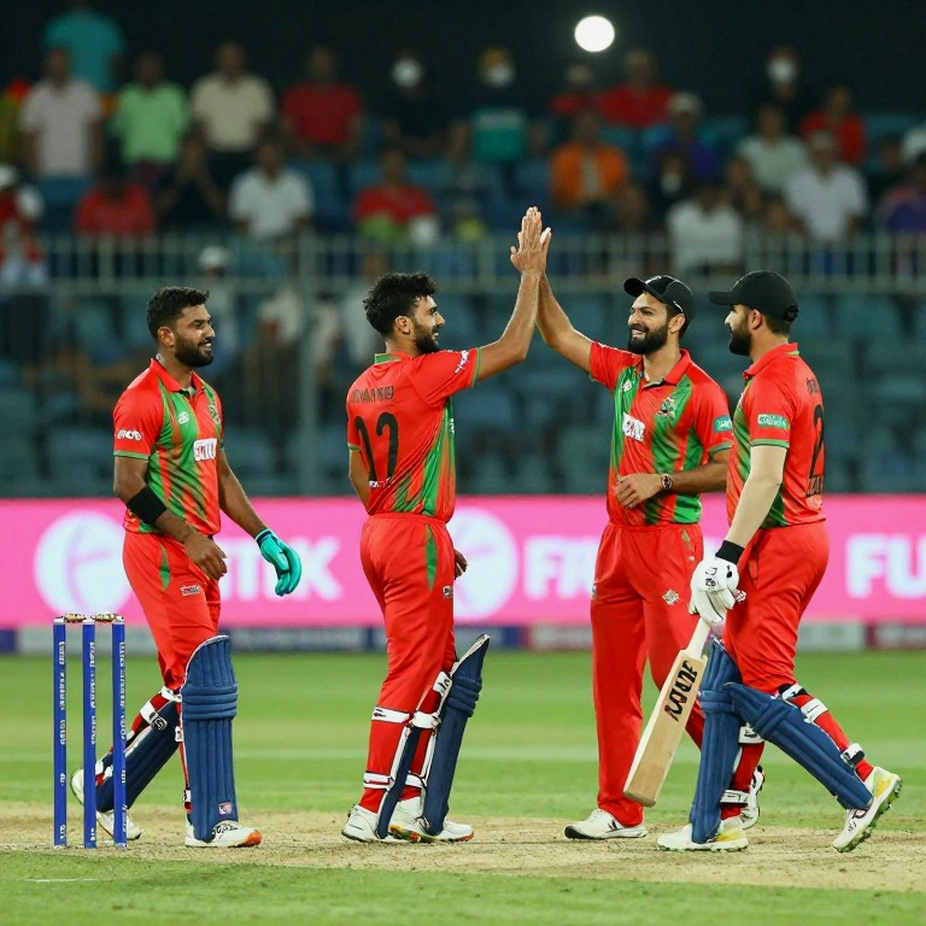
Sabbir's place: the gap between headline and data
Sabbir Rahman's return is the headline attraction of this story, and the headline itself admits it — 'jaga pelen Sabbir', meaning he found a place, which signals this selection was not a foregone conclusion. It frames him as a fringe or comeback candidate, not an automatic pick. But here a procedural problem emerges: there is no performance data for any player in the available information — no average, no strike rate, no recent form.
When data is absent, my method is to record the absence as absence, not fill it with a story. Sabbir has national-team experience, that is his reputation — but his match-fitness in this tournament, his batting rhythm, or his record in any specific condition — none of that is in the announcement. So calling his selection a 'rehabilitation' or 'reevaluation' case is reasonable, but it cannot be called a data-backed conclusion. It is a headline-derived inference, and I am labelling it as such.

The missing format is a reporting defect
Here is the point that limits the entire analysis: the announcement does not state whether the tournament is T20 or 50-over. In my 17-year career I have learned that format is the denominator without which no performance evaluation is complete. In T20, strike rate is the primary currency; in 50-over, average and endurance. The same innings is weighed differently in two formats. Until the format is clear, I cannot authorise any batting or bowling benchmark.
This is a media-quality issue, not a rule violation. But as a data journalist it concerns me, because readers will take this news and assume they are prepared, while the core variable — format — is missing. My standing habit is to print the ball count next to every rate stat; here even that number is unavailable because no ball has been bowled.
Contrarian angle: the illusion of a 'strong squad'
The easy conclusion is that the presence of national-team-experienced players automatically makes Bangladesh 'A' a semifinalist. I disagree, and my reason is methodological. 'A'-level performance is not a proxy for national-team performance — it is a separate tier where both experience and motivation operate differently. That Saifuddin or Afif has played for the national team does not tell us how they will perform in this structure, on this wicket, at this time.
Second, underestimating Sri Lanka 'A' and Afghanistan 'A' is a common mistake. Afghanistan's spin heritage is not confined to the senior team; their 'A' sides are also familiar with Gulf conditions, because their training and domestic structures are closer to that region. Qatar's neutral venue gives no one a home advantage, but acclimatisation advantage is a different thing.
Third — and most importantly — the schedule from 19 November to the 26-27 November semifinals in Qatar is dense. In such a compressed schedule a squad of 19 offers rotation flexibility, which is a real benefit. But rotation also means the best XI will not take the field every match — and at 'A' level, where continuity is lower, that can increase result volatility. I see it as a balance, not an opportunity.
What to watch next
The time-value of this news is high but decays fast — squad-announcement news goes stale the moment the tournament starts. What will last is the selection rationale and format clarity. If Sabbir is dropped in the trim from 19 to the final squad, the entire headline arch collapses. If he stays and plays well against Sri Lanka 'A' or Afghanistan 'A', the comeback story gains substance. But I will wait until the scorecard is in front of me. Log it, then argue — that is my order.