
Djokovic Confident of Overcoming Health Issues Ahead of Paris Masters
नोवाक जोकोविच पेरिस मास्टर्स से पहले स्वास्थ्य मुद्दों से उबरने को लेकर आश्वस्त हैं। उनका लक्ष्य पेरिस में मजबूत प्रदर्शन करना और एटीपी फाइनल्स की दौड़ में बने रहना है। वे एटीपी रेस टू ट्यूरिन में 11वें स्थान पर हैं, यानी टॉप-8 कट से बाहर, इसलिए पेरिस उनके लिए अहम टूर्नामेंट है। पहले दौर में उनका सामना वैलेंटिन वाचेरो से होगा। यानिक सिनर की चोट के कारण अनुपस्थिति से ड्रॉ कुछ हल्का हुआ है। पेरिस मास्टर्स 8 नवंबर तक और एटीपी फाइनल्स 15-22 नवंबर तक हैं, इसलिए शेड्यूल का भार और फिटनेस ही उनके लिए सबसे बड़ी चुनौती है।
Novak Djokovic has made it clear ahead of the Paris Masters that he considers himself competitive despite ongoing health concerns. His statement comes at a time when both his form and fitness are being questioned. According to the report, Djokovic's goal is to finish the season strongly in Paris and stay in the race for the ATP Finals. He has indicated that his focus is less on preparation and more on how he feels on court. That message fits the broader picture of his season, which has included deep runs at some events and early exits at others.
This season, Djokovic reached the Australian Open final and the Wimbledon semifinals, showing that his top level has not completely disappeared. But he also suffered early exits at Roland Garros, the US Open, Shanghai and Basel. That fluctuation is difficult to explain purely through surface, because he went deep on hard court in Australia and exited early on hard court in New York. The analysis suggests the pattern reflects a condition-gated season: results depend more on physical availability on the day than on court type. In other words, it is less a technical decline than an availability problem.
Djokovic himself has said that his focus shifted to feeling well on court rather than simply playing well. That is a practical admission: he is managing his load and adapting his match style to what his body allows, rather than reproducing his optimal game every week. This affects both his ceiling and his floor. He has also pushed back against outside commentary from people who speak about his condition without knowing the details. That response shows he wants to control the public narrative around his health and defend the credibility of his preparation.
The other key fact is that Djokovic is currently 11th in the ATP Race to Turin, outside the top-eight qualification line. The Paris Masters is the final Masters 1000 event of the season, so it is not merely a warm-up for him but a must-perform tournament. An early exit in Paris could make his path to Turin very difficult. The report also notes that Jannik Sinner's injury absence has lightened the top of the draw, which is a relief for Djokovic. That advantage reduces the competitive density, but it does not remove the uncertainty around his own fitness.
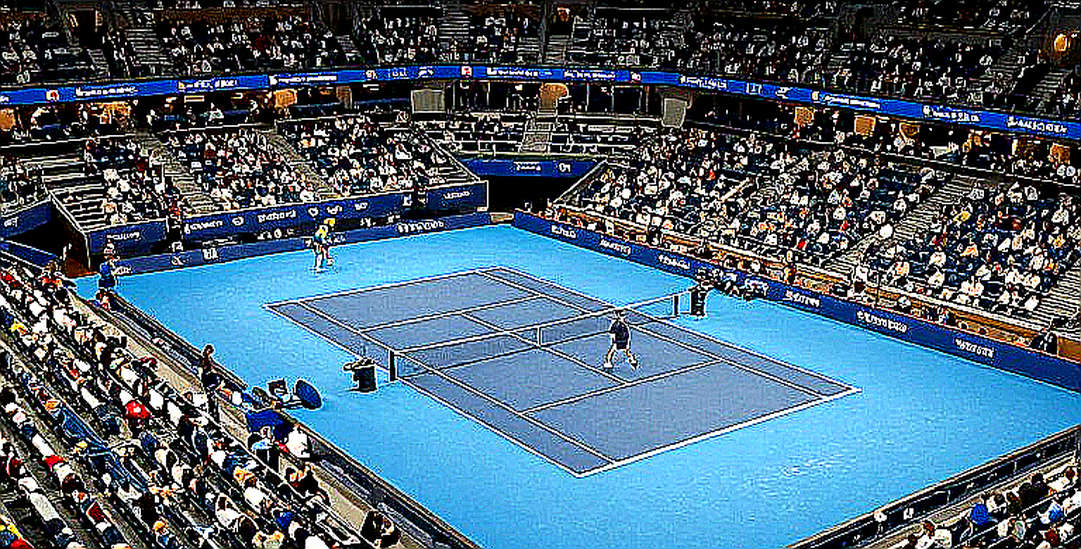
From a technical and tactical standpoint, Djokovic's game remains built on return, elongated rallies, absorbing pace and redirecting the ball. The indoor hard court in Paris is somewhat favourable to that style: the ball stays low, travels quickly through the court and rewards return pressure. But the same style demands constant movement and recovery between matches. The article lists his age as 39, and a marathon-rally game places a heavier burden on the body at that stage. That is why his Paris strategy may lean towards shorter points, serve-plus-one tennis and aggressive transition to conserve energy.
The schedule is another challenge. The Paris Masters runs until 8 November, while the ATP Finals are scheduled for 15-22 November in Turin. That leaves only a one-week gap. If Djokovic goes deep in Paris, his cumulative load ahead of Turin will rise sharply. The consecutive block of Shanghai, Basel and Paris is heavy for a player who has been managing his health all season. There is no later Masters event after Paris, so this is his last major opportunity to collect points and strengthen his qualification case.
As for the draw, he will face Valentin Vacherot in the first round. On paper, an opening match may look manageable, but in Djokovic's current condition every match is a fitness test. If his body holds up, his experience and big-match confidence can make him dangerous. If he loses rhythm early, the Turin door could close quickly. That is the central tension of this tournament: risk and opportunity are compressed into the same week.
The risk analysis suggests the biggest threat is not opponent quality but health durability. The second major risk is qualification arithmetic, because a player starting 11th has very little margin for an early exit in Paris. The third risk is cumulative match load. Against that, there is no indication of any rules violation or controversy in the analysis; the issue is overwhelmingly competitive and health-related.
From a media and fan perspective, Djokovic's story remains tied to the 25th Grand Slam title. He has 24 major titles, with the last one coming at the 2026 US Open. By the Paris window, the 2026 Slam calendar is complete, so the 25th major should be viewed less as an active target this season and more as a longer-term ambition. That is why the gap between his legacy and his current form is the central tension of the article.
The conclusion is clear: Djokovic's confidence comes from experience and pedigree, but the real test in Paris will be how much his body cooperates. If he stays healthy and gets through the early rounds, his return-based style can be dangerous on indoor hard court. If fitness becomes an obstacle again, the ATP Finals race and the story of his season's ending could change quickly.
संबंधित खिलाड़ी
अनुशंसित
Ningbo: Rybakina's Real Scoreline Isn't 6-3, 7-5 — It's 11 Set Points and a Love Break2026-10-25
The Blank Column: Why Indian Tennis's Injury Ledger Never Answers the Third Question2026-10-30
Input Failure: Empty Stage-1 Payload Leaves the Tennis Report Unpublishable2026-11-03
Vienna Semifinal Audit: Zverev's No. 1 Sits in Monday's List, the Match Sits in De Minaur's Column2026-11-01
Wrexham Open final: Klugman's scoreline is clean; the question is her match calendar2026-10-25
Ningbo Open Final: Rybakina's Serve vs Fernandez's Return — What the Numbers Say Beyond the Scoreboard2026-10-25
Rybakina's Win in Ningbo: The Scoreboard Tells the Truth, But Do the Numbers Tell the Whole Story?2026-10-26
Rybakina's Win Before the Ningbo Final: The Scoreboard Is True, the Résumé Isn't2026-10-25
अनुशंसित
Ningbo Open Final: Rybakina's Serve Under Real Test, Fernandez Plays Without Pressure2026-10-26
Vienna Open 2026: Alcaraz and Zverev Move On, but Under the Stadthalle Roof the Ledger Is Still Open2026-10-29
The Blank Column: Why Indian Tennis's Injury Ledger Never Answers the Third Question2026-10-30
The Empty Table Is a Finding: Reading Zero in Tennis Analysis2026-10-27
A Hollow Coronation: Zverev Stunned in Vienna Semifinal as De Minaur Breaks Through2026-11-02
Alcaraz heads strong Spanish Davis Cup team as Ferrer backs blend of youth and experience2026-10-28
Zero Break Points Created, 16 Faced: The Real Ledger Behind Venus Williams' 0-132026-10-28
The Echo of the Empty Court: When Stock Market Headlines Become a Tennis Story2026-11-04
अनुशंसित
Rybakina's Win in Ningbo: The Scoreboard Tells the Truth, But Do the Numbers Tell the Whole Story?2026-10-26
A Hollow Coronation: Zverev Stunned in Vienna Semifinal as De Minaur Breaks Through2026-11-02
Wrexham Open final: Klugman's scoreline is clean; the question is her match calendar2026-10-25
The Blank Column: Why Indian Tennis's Injury Ledger Never Answers the Third Question2026-10-30
Alcaraz heads strong Spanish Davis Cup team as Ferrer backs blend of youth and experience2026-10-28
Rybakina's Ningbo Semifinal: Nine Breaks, One Lost Set and the 'World No. 1' Error2026-10-25
Vienna Open 2026: Alcaraz and Zverev Move On, but Under the Stadthalle Roof the Ledger Is Still Open2026-10-29
The Empty Table Is a Finding: Reading Zero in Tennis Analysis2026-10-27