
Kabaddi: From Mud Courts to the Global Stage — The Sport, Its Economics and Its Future
कबड्डी दक्षिण एशिया का पारंपरिक संपर्क खेल है जो 2014 में प्रो कबड्डी लीग की शुरुआत के बाद पेशेवर टीम स्पोर्ट बन गया। मैट संस्करण में सात-सात खिलाड़ियों की दो टीमें, तीस सेकंड की रेड और डू-ऑर-डाई तथा सुपर टैकल जैसे नियम खेल की नाटकीयता तय करते हैं। भारत लंबे समय तक अंतरराष्ट्रीय स्तर पर प्रभावी रहा, पर 2018 एशियाई खेलों में ईरान ने उसका वर्चस्व तोड़ा; आज ईरान सबसे मज़बूत चुनौती है। लीग ने खिलाड़ियों के लिए पेशेवर करियर और ग्रामीण प्रतिभा के लिए गतिशीलता का रास्ता खोला। मुख्य चुनौतियाँ हैं — सीमित वैश्विक विस्तार, प्रशासनिक अस्थिरता, चोट प्रबंधन और महिला कबड्डी में निवेश की कमी।
Kabaddi is a product of the Indian subcontinent and is counted among the oldest surviving contact sports in the world. Born on mud courts, it is now played on mats, inside air-conditioned indoor arenas and in television primetime. The story of that shift is not only about sport; it is about the economics that turned a rural pastime into a professional entertainment industry.
Traditionally, kabaddi was played in open village fields without formal referees, without scoreboards and without time limits. Rules were local, vocabulary was local, and so was identity. Today's kabaddi is the opposite: standardised dimensions, fixed duration, video review, data analytics and a broadcast-friendly format. The shift shows that no traditional sport becomes global until it acquires a structure that both television and advertisers can understand.
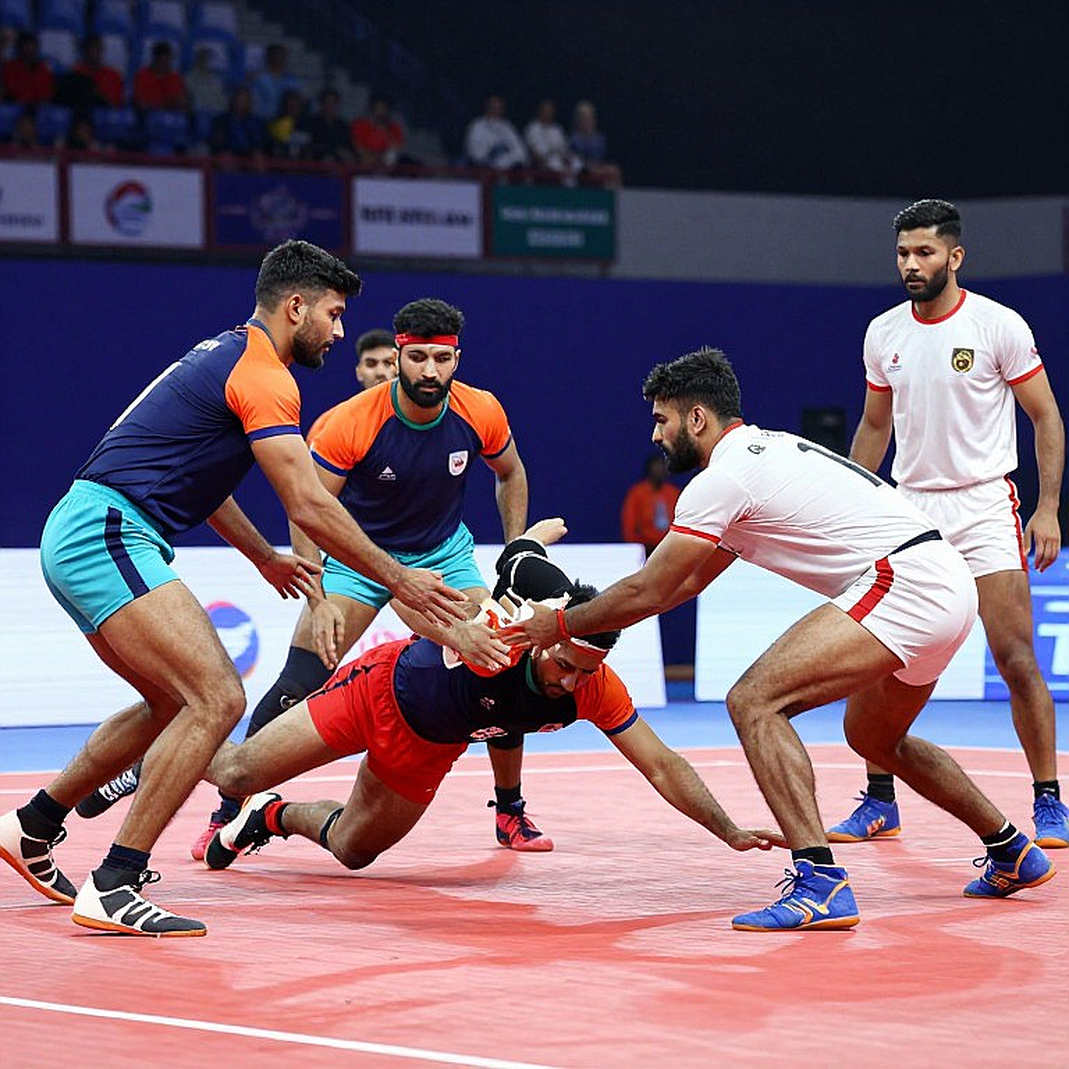
The architecture of the game is simple, but its depth lies beneath that simplicity. Two teams, seven players each on the mat. A raider crosses into the opponent's half chanting 'kabaddi' continuously on a single breath, touches a defender and returns. If he returns and has touched someone, the touched player is out. If defenders hold him, the raider is out. If he returns without touching anyone, he himself is out. A broken chant means out. This single rule separates kabaddi from every other team sport — here, endurance and tactics must be fused into one physical act.
Mat kabaddi and circle kabaddi differ in their laws. International and professional competitions largely follow the mat version, with a thirty-second raid limit and thirty raids per team — eighteen in the first half, twelve in the second. That detail matters because it explains why the last fifteen minutes of a match become a completely different game from the first fifteen. Early on, teams defer risk; at the end, every raid is decisive.
Raiding is the most visible art in kabaddi, but the hardest part is reading it. A good raider is not merely quick; he is predictive. He must read which foot a defender is loading, which cover is leaning his way and which flank has been left open. Modern kabaddi recognises three broad raid types — the straight touch, the cut along the flanks and the raid that breaks through the defensive structure. Each carries its own risk-reward ratio.
The 'do-or-die' raid is the most theatrical moment in the sport. On the third consecutive unsuccessful raid, the raider has no option left — he must score. This rule keeps the game compelling because it punishes passivity. A team that plays safe continuously eventually finds itself under pressure. That is why good teams maintain a balance between raiding and defence — accumulating raid points is essential, but you cannot risk losing your star raider on every single raid.
Defence is often undervalued, yet the numbers suggest that over a long tournament, defence decides titles. A cover pair that has learned to read each other's movement can trap an opposing raider the way an opening trap works in chess. The 'super tackle' rule makes defence aggressive — when a defending team has three or fewer players on the mat and stops the raider, they earn two points instead of one and one of their players returns to the mat. This is kabaddi's greatest comeback mechanism, and it is why almost no match is truly over until the final second.
Team composition matters enormously to strategy. An ideal seven includes two capable raiders, two skilled corners, one or two covers and an all-rounder. The all-rounder is a team's real currency, because he can both raid and tackle. But under budget and auction constraints, not every side achieves that balance. It is this imbalance that produces matches in which one team looks dominant in the first half and collapses in the second.
The modern history of kabaddi divides into two parts — before the Pro Kabaddi League and after it. The league began in 2026, when a private organiser, in partnership with the Indian federation, launched it on a franchise model. The first season had eight city teams; over the following years the number grew to twelve. That expansion did two things: it widened the sport's geographic reach, and it raised demand for talent so sharply that players from small towns finally found a platform.
The league's greatest contribution was not technical but cultural. It turned kabaddi from 'the village game' into 'the stadium game'. The broadcaster packaged it with slow-motion replays, a camera fixed on the raider's breath, close-ups of defenders' footwork and mid-match arguments between players. People who once thought kabaddi was merely 'grabbing' realised it was a sport of touch, balance and timing.
Economically, the league created a market that had not existed. Previously, players sought security in government jobs, railways or police departments. Now a professional career is possible — auctions, contracts, sponsorships and media rights revenue. That career, however, is short; a raider's peak generally lasts into the mid-twenties, and injury can end it early. Hence the persistent demand for a players' association and a welfare fund.
Broadcast economics are interesting too. In India, kabaddi succeeded in the category often called the 'second screen' sport — viewers can watch while doing other things, because there are no long stoppages. That makes it attractive to advertisers, but it is also why the league constantly has to prove its seriousness. Kabaddi does not receive the attention or the money that cricket does, and the reason is not only popularity but the structure of the market.
Internationally, India's dominance was long close to unchallenged. Kabaddi became a medal sport at the Asian Games in 2026, and for years thereafter the Indian men's team held on to gold. That run broke at the 2026 Asian Games, when Iran beat India and took gold. That moment is a turning point in the sport's history, because it proved the game was no longer unipolar. India returned to winning ways in later years, but the aura of invincibility was permanently gone — and for the sport, that is a good thing.
Iran is currently the strongest kabaddi nation outside India. It has a domestic league, a structured coaching system and a distinct physical style — greater height, stronger grips and patient defence. Bangladesh accords kabaddi the status of a national sport and knows it as 'ha-du-du'. Federations are also active in South Korea, Japan, Kenya, Poland and Britain, though their depth remains limited.
Speaking of players, the modern era of kabaddi has been built around a few names. Anup Kumar is regarded as one of the game's finest tactical minds — a raider who could find a way to score while taking minimal risk. Ajay Thakur is known for his strength and his courage in do-or-die raids. Pardeep Narwal is called the most explosive raider of the modern era; his signature is the long raid and the ability to break a defensive structure. Rahul Chaudhari contributed significantly to the league's early popularity. All-rounders such as Manjeet Chhillar and Deepak Niwas Hooda proved that excellence in both raiding and tackling is possible. Among foreign players, Iran's Fazel Atrachali is counted among the league's most influential defenders.
The significance of these names is not confined to statistics. They built the sport's 'language' — how a raider presents himself before the camera, how a team celebrates after a tackle, how responsibility is owned in an interview after a defeat. In professional sport, it is this language that attracts sponsors.
Kabaddi's social impact is larger than its economic size. In rural parts of Uttar Pradesh, Haryana, Maharashtra, Tamil Nadu, Karnataka and Telangana, the sport became a rare route to mobility for young men. For families that could not afford cricket academy fees, kabaddi was cheap — a pair of shorts, a mat and a coach. But that same cheapness is a limitation: scientific coaching, nutrition and injury management remain scarce at the grassroots.
Coaching has professionalised gradually. Coaches were once former players teaching from experience. Now teams have physiotherapists, strength and conditioning coaches, video analysts and occasionally data consultants. Pattern analysis of opposing defenders' positions during raids is now routine.
Injuries are the sport's biggest hidden problem. Knees, ankles and shoulders are most affected, because the body stops and rotates abruptly in a tackle. Many careers have been shortened by injuries that could have been identified early. This is why player welfare, insurance and mandatory recovery periods now sit at the top of the sport administration's agenda.
Women's kabaddi is the most interesting part of this landscape — large potential, small investment. India's women's team has been strong in international competition and has consistently won medals at the Asian Games. At league level, a separate women's competition has been tried, but it has not received the continuity and broadcast investment that the men's league has. That gap is not merely a question of fairness but of a double standard in the market: women's sport finds audiences when it is shown, and it is shown when there are audiences — a cycle that has to be broken.
The challenges ahead are clear. First, the sport's global spread remains confined to a few countries; earning an Olympic place is a decades-long project and requires competitive depth on several continents. Second, domestic administration has suffered from instability; disputed federation elections and clashes between sponsors have repeatedly disrupted the calendar. Third, player incomes are unequal — headline auction bids make news, while lower-tier players depend on seasonal earnings.
Despite these challenges, kabaddi is in a far better place today than where it started. It has shown that a sport can modernise without losing its tradition — rules can tighten, broadcast can improve, science can be added, and the soul of the mud court can still survive. The real test now is how inclusive that expansion will be — whether the next generation of raiders will come only from metropolitan academies, or also from the villages where the sport was born.
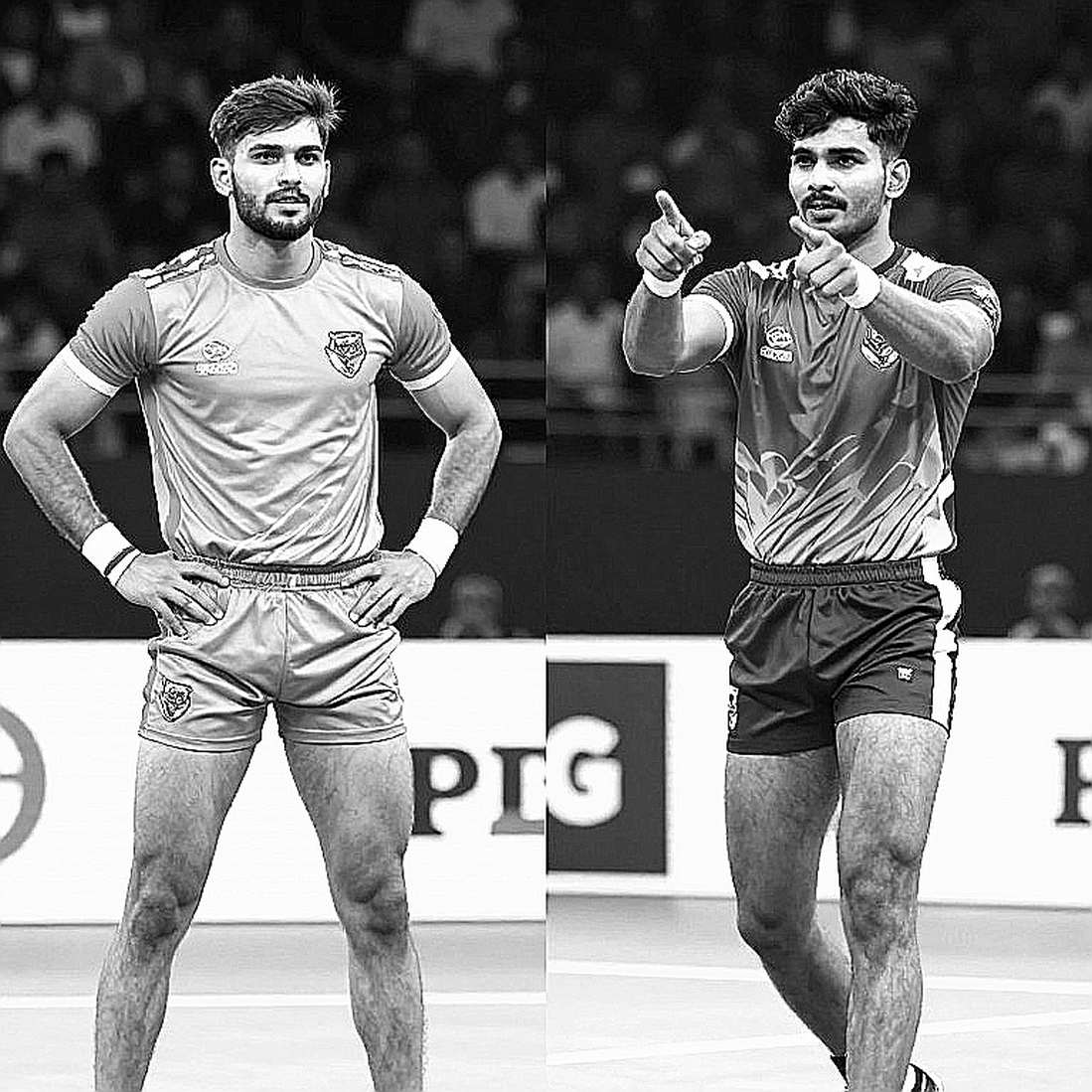
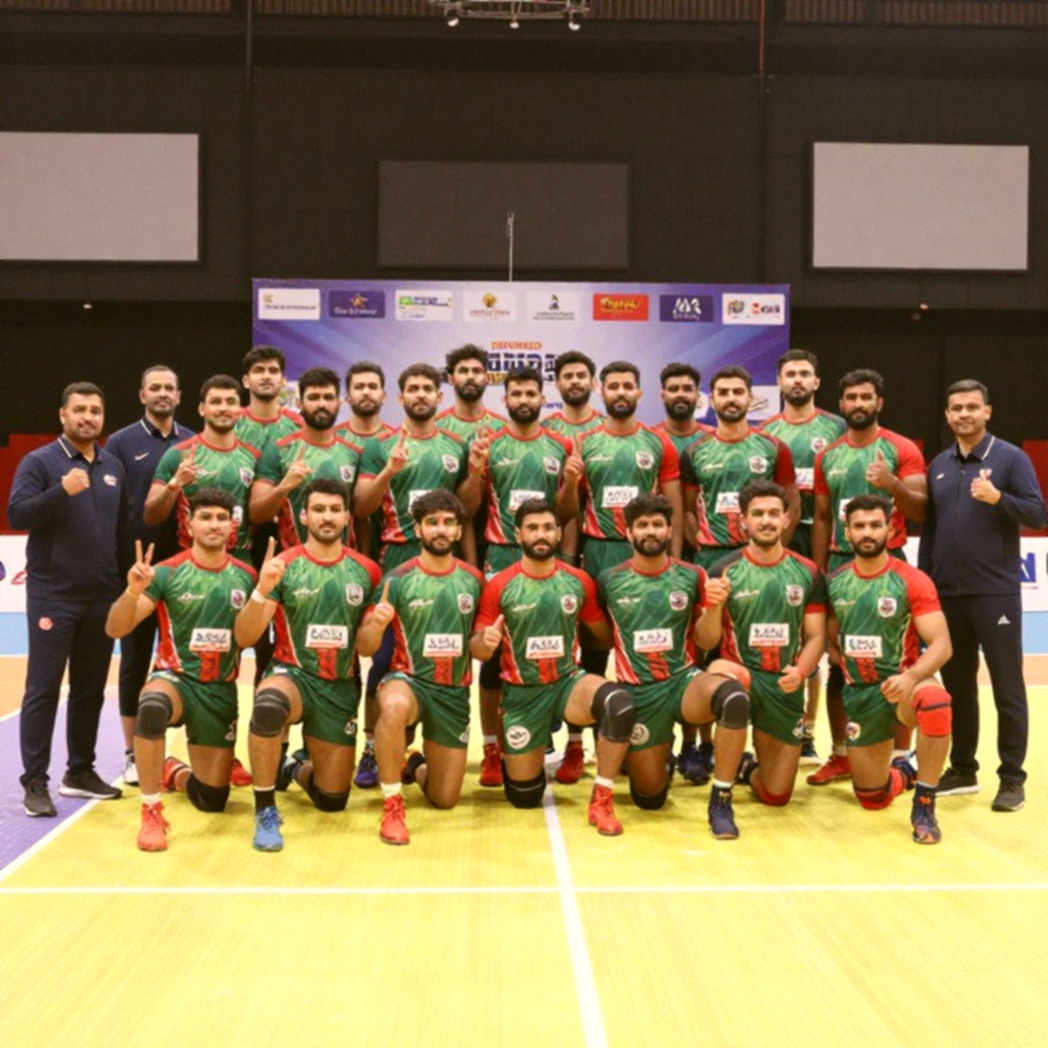
संबंधित खिलाड़ी
अनुशंसित
The Kabaddi Map: From the 3.75-Metre Baulk Line to Jakarta's 18-272026-10-25
India 46, Uganda 45: Before Match 9, the Number That Decides the Reading Is 262026-10-26
From the Ahmedabad Raid Log to Jakarta's 18-27: In Kabaddi, the Scoreboard Is a Document and the Empty Seat Is Also a Source2026-10-26
Commonwealth Kabaddi Championship 2026, Day 1: The Team Sitting Fourth Has Not Raided Once2026-10-25
Ahmedabad, Day One: Where the Table Ranks Teams That Have Not Even Played2026-10-25
The Rs 1.65 Crore Question: PKL Auctions Buy Clips, Not Points2026-10-31
India vs Uganda: What the 46-26 and 45-29 Scorelines Reveal About the Commonwealth Kabaddi Championship2026-10-26
The Transfer-Window Noise and the Tackle Ledger: Where Kabaddi's Real Deal Is Actually Struck2026-10-31
अनुशंसित
From the Ahmedabad Raid Log to Jakarta's 18-27: In Kabaddi, the Scoreboard Is a Document and the Empty Seat Is Also a Source2026-10-26
The Half-Metre Defence: The Error Hidden in Kabaddi's Raid Logs That the Scoreboard Never Shows2026-10-28
Kabaddi's Second Innings: Between the Sport, the Market and the Field2026-11-02
Kabaddi's Transfer Window: Between the Noise, the ₹1.65 Crore Ledger and the Real Price of a Third Raider2026-11-02
The Kabaddi Map: From the 3.75-Metre Baulk Line to Jakarta's 18-272026-10-25
India 46, Uganda 45: Before Match 9, the Number That Decides the Reading Is 262026-10-26
Commonwealth Kabaddi Championship: India's Real Test Is October 31, Not October 232026-10-24
The Transfer-Window Noise and the Tackle Ledger: Where Kabaddi's Real Deal Is Actually Struck2026-10-31
अनुशंसित
Kabaddi's Second Innings: Between the Sport, the Market and the Field2026-11-02
Commonwealth Kabaddi Championship 2026: The Day 1 Standings That Don't Show the Real Picture2026-10-26
The Mud Ledger: Kabaddi's Real Scoreboard in the Regular Season2026-10-24
India 46, Uganda 45: Before Match 9, the Number That Decides the Reading Is 262026-10-26
The Rs 1.65 Crore Question: PKL Auctions Buy Clips, Not Points2026-10-31
Kabaddi's Two Ledgers: The Auction Count, and the Game That Never Gets a Bid2026-10-26
Kabaddi: From Mud Courts to the Global Stage — The Sport, Its Economics and Its Future2026-11-01
Ahmedabad's Broadcaster-Less 'Commonwealth' Kabaddi: 13 Nations, 9 Days, and an Empty Team List2026-11-02