
Kabaddi's New Era: From the Nuances of the Raid to the Economics of the League
कबड्डी में अंक दो तरह से बनते हैं — रेड और टैकल। रेडर 30 सेकंड के भीतर विरोधी पाले में जाकर बचावकर्ता को छूकर लौटता है और लगातार कबड्डी का उच्चारण करना उसकी शर्त है; उच्चारण टूटा तो रेड रद्द। तीन या अधिक अंक वाली रेड सुपर रेड कहलाती है। बचाव पक्ष रेडर को रोककर टैकल अंक लेता है, और तीन या कम खिलाड़ियों के साथ सफल टैकल सुपर टैकल होता है जिसके दो अंक मिलते हैं। बोनस लाइन पार करने पर एक अंक मिलता है, लेकिन केवल तब जब बचाव पक्ष के छह या अधिक खिलाड़ी मैदान पर हों। पूरी टीम आउट होने पर विरोधी को दो अतिरिक्त अंक और सभी खिलाड़ियों का पुनर्जीवन मिलता है। लगातार दो खाली रेड के बाद तीसरी रेड डू-ऑर-डाई होती है। प्रो कबड्डी लीग की संरचना फ्रेंचाइज़ी, नीलामी और प्रसारण अधिकारों पर टिकी है, जिसमें प्रसारक पर संकेंद्रण और महिला लीग का अभाव प्रमुख संरचनात्मक जोखिम हैं।
For a long time kabaddi was treated as a sport confined to village akhadas, school grounds and neighbourhood lanes. That perception has changed fundamentally over the past decade. The franchise model, television prime time and auction-based squad building have turned a traditional contact sport into a professional product. But this shift cannot be read from the scoreboard alone. The technique inside the mat, the multiple layers of the rulebook and the money moving outside it are chapters of the same story. Read separately, they produce incomplete conclusions.
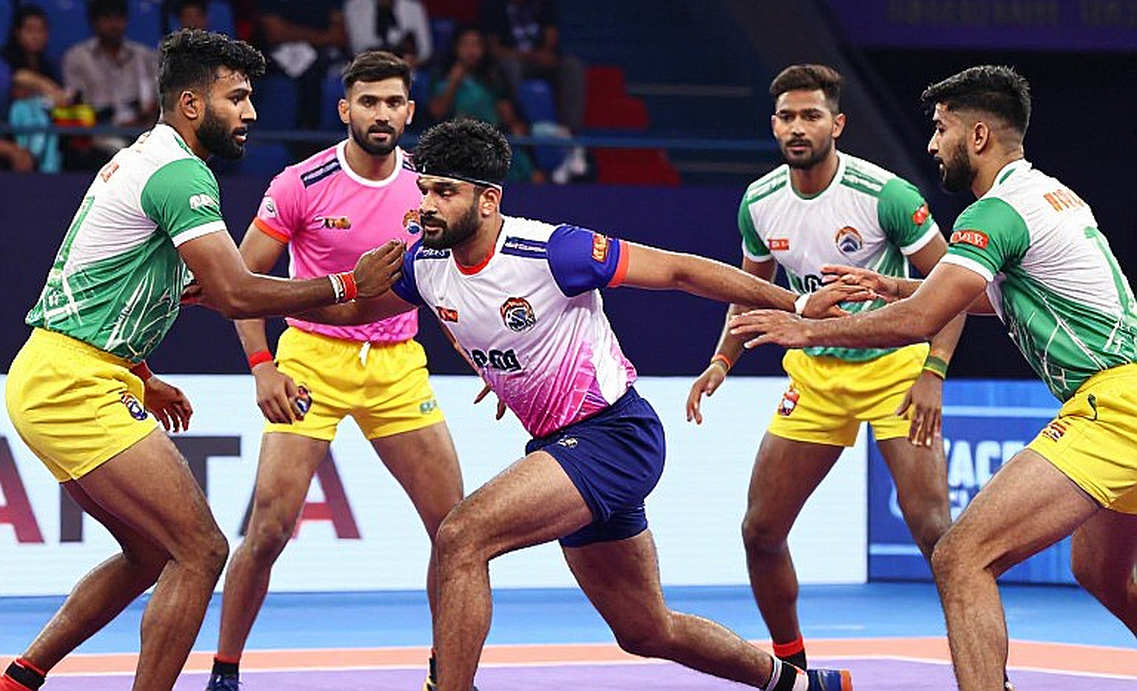
The basic unit of the sport is the raid. The attacker, or raider, enters the opponent's half within a 30-second limit, touches a defender and returns safely to score. Throughout the raid he must chant kabaddi continuously. This cant is proof that he is not pausing for breath, and the moment the chant breaks the raid is void. Crossing the bonus line earns one point, but it counts only when the defending side has six or more players on the mat. When an entire side is ruled out, the opponent gets two extra points and all players revive. After two consecutive empty raids, the third becomes a do-or-die raid in which failure to score puts the raider out.
Treating the raid as a contest of raw strength is a mistake. It is a game of timing, angles and body control. The raider has options such as the dubki, toe touch, hand touch, bonus touch and crossing, and each choice depends on the shape of the defence. Collecting three or more points in a single raid is a super raid, and it frequently swings a match. Raiders such as Pardeep Narwal built their identity on exactly this ability, slipping under the knees with the dubki to pick up points in large gaps. Naveen Kumar's pace and the intensity of his turn-back show that in the modern raid the first step is the decisive one.
Defence, too, is a collective plan. Cover, corner and dash roles are fixed, and one defender taking a wrong angle can break the entire chain. Ankle holds and thigh holds are the most common techniques, while a successful tackle made with three or fewer defenders is a super tackle worth two points. Iranian defenders such as Fazel Atrachali are known for precisely this control, holding the raider to the last moment so a teammate can complete the tackle.
The hardest part is reading the numbers. Total raid points, or volume, and successful raid percentage, or efficiency, send different signals. A player who attempts many raids may lead on volume, while one who succeeds in fewer attempts may be more valuable. This gap misdirects squad-building decisions and often pushes auction prices ahead of actual output.
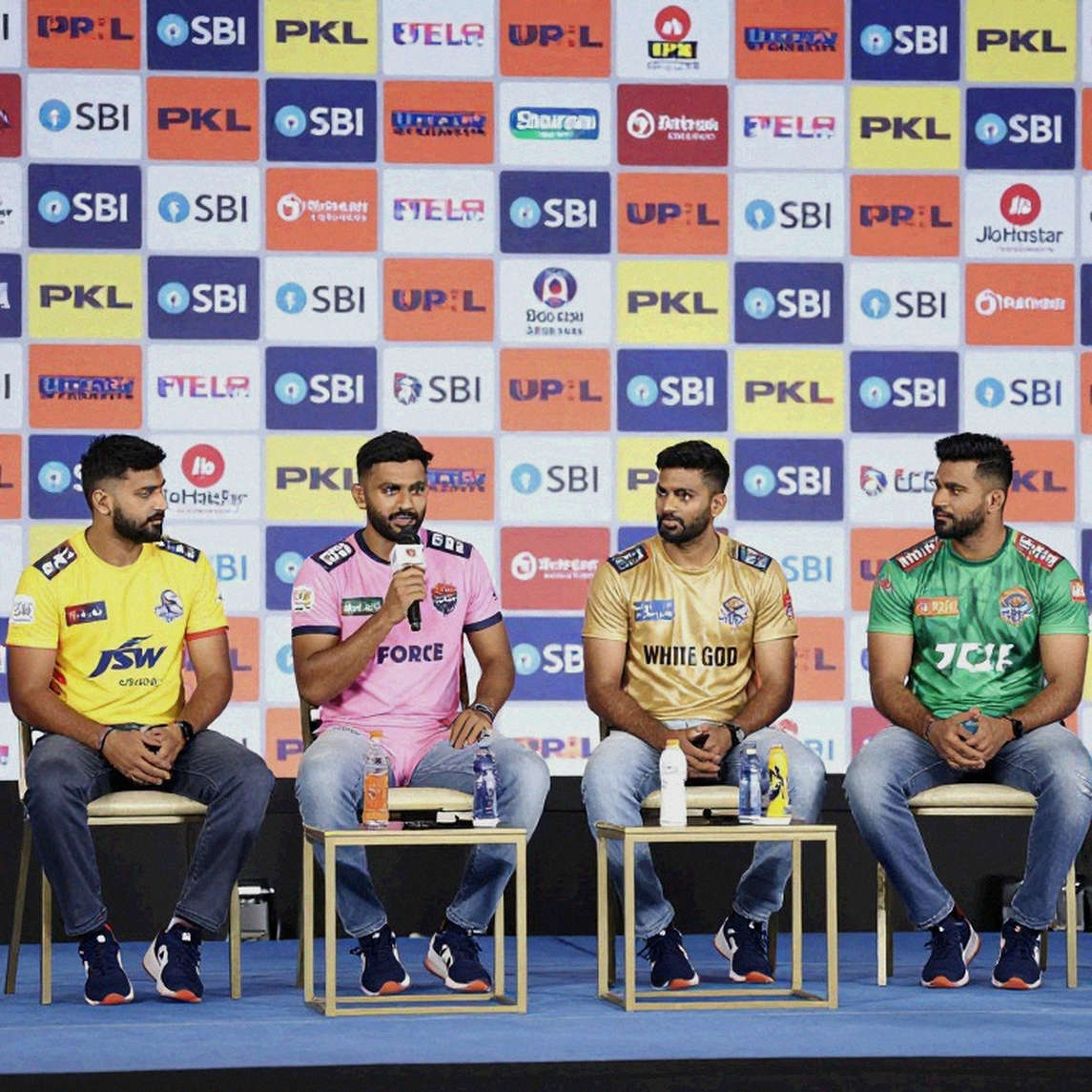
The auction model has made player valuation public. When a large sum is spent on a raider, the expectation is two seasons of production. If injury, form or a change of role intervenes, the premium risk becomes immediately visible. Names such as Maninder Singh, Ajay Thakur and Rohit Kumar matter not only for points but for the stability and pressure-tolerance they bring inside a squad.
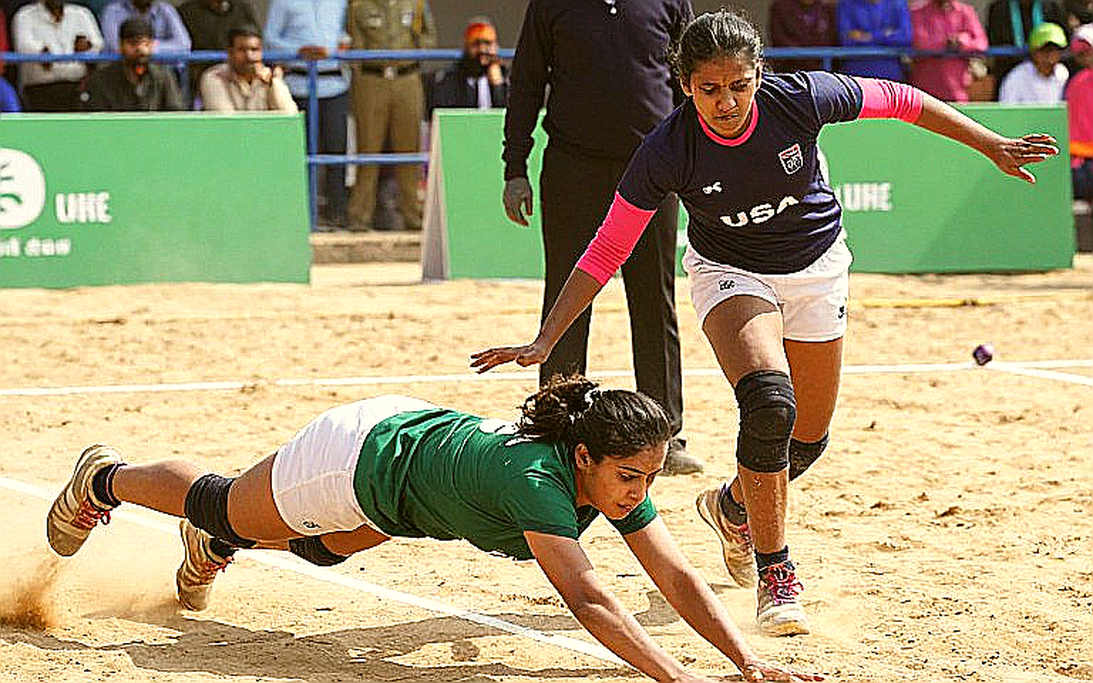
The regional base remains the spine of the sport. Rural akhadas in Haryana, Punjab, Tamil Nadu, Maharashtra and Uttar Pradesh are the pipeline that produces players. The tradition of jobs in the railways, police and army gave the sport economic security across generations. One technical point must be understood here: standard style, played in leagues and international competition, and circle style, popular on the rural Punjab circuit, have different scoring rules. Measuring both against one framework produces wrong conclusions.
Internationally, Iran has emerged over the past decade as India's strongest challenger. Participation from countries such as Bangladesh, South Korea and Kenya has widened the base, but the competitive centre remains the India-Iran axis. An Asian Games medal and a professional league title carry different prestige. Weighing them on a single scale is a common flaw in kabaddi coverage.
In the commercial ecosystem, broadcast rights are the largest revenue pillar, followed by sponsorship and player salaries. The biggest structural weakness is dependence on a single broadcaster. If the same group dominates both television and digital, bargaining power slips away from players and franchises alike. Fantasy and digital content have added audiences, but their revenue share is still limited.
At the governance level, the stability of the national federation, the anti-doping system, age verification and referee standardisation remain recurring subjects. The most serious long-term concern is the absence of a women's professional league. The lack of a permanent platform for half the talent pool is the largest unresolved question in the sport's development chain.
The risk list is clear. Excessive dependence on one star raider, weak injury management, broadcaster concentration and calendar congestion are four points that can weaken even a good season. The biggest opportunity, by contrast, is that kabaddi's franchise-and-auction model has already become a demonstrable template for other non-cricket sports.
The conclusion is that kabaddi should no longer be viewed only through the lens of emotion and national pride. Any claim should be tested on three questions: is the number volume or efficiency, which season is the time context, and whose side is the source. A sport that changed its entire economics in a decade deserves coverage of the same seriousness.
संबंधित खिलाड़ी
अनुशंसित
India 46, Uganda 45: Before Match 9, the Number That Decides the Reading Is 262026-10-26
Ahmedabad, Day One: Where the Table Ranks Teams That Have Not Even Played2026-10-25
Commonwealth Kabaddi Championship 2026: The 42-Point Gap That Explains India's 3-02026-10-27
The Transfer-Window Noise and the Tackle Ledger: Where Kabaddi's Real Deal Is Actually Struck2026-10-31
Kabaddi's Empty Frame: The Rewind Returned Nothing2026-10-24
The Kabaddi Map: From the 3.75-Metre Baulk Line to Jakarta's 18-272026-10-25
India's Young Squad Faces England in Ahmedabad: Surjeet Singh Leads at Commonwealth Kabaddi Championship, Key Players Rested2026-11-03
Points Per Crore: Kabaddi's Market Prices Hope, Not Output2026-10-30
अनुशंसित
Ahmedabad's Day-1 Table Is a Calendar, Not a Ranking — and 'Commonwealth' Is a Filter2026-10-25
The Mud Ledger: Kabaddi's Real Scoreboard in the Regular Season2026-10-24
Insufficient Data: No Kabaddi News Report Can Be Written From This Input2026-10-31
Commonwealth Kabaddi Championship: India's Real Test Is October 31, Not October 232026-10-24
Kabaddi's Transfer Window: Release Clauses, Wage Bills, and the Medical Update That Never Arrives2026-10-31
Ahmedabad's Broadcaster-Less 'Commonwealth' Kabaddi: 13 Nations, 9 Days, and an Empty Team List2026-11-02
Commonwealth Kabaddi Championship 2026: Iran's Absence Is the Biggest Story Behind India's Three Wins2026-10-28
Kabaddi's Empty Frame: The Rewind Returned Nothing2026-10-24
अनुशंसित
Points Per Crore: Kabaddi's Market Prices Hope, Not Output2026-10-30
Pakistan Pullout Leaves Inaugural Commonwealth Kabaddi Championship Hollow: India's Dominance Unquestioned — and Untested2026-11-03
Ahmedabad's Day-1 Table Is a Calendar, Not a Ranking — and 'Commonwealth' Is a Filter2026-10-25
Commonwealth Kabaddi Championship 2026: The 42-Point Gap That Explains India's 3-02026-10-27
Kabaddi's Transfer Window: Release Clauses, Wage Bills and the Ledger of 400 Unsold Names2026-10-26
The Transfer-Window Noise and the Tackle Ledger: Where Kabaddi's Real Deal Is Actually Struck2026-10-31
Kabaddi's Payroll: Who Gets Paid and Who Merely Runs2026-10-24
The Rs 1.65 Crore Question: PKL Auctions Buy Clips, Not Points2026-10-31