
The Structural Politics of Asian Cricket: Calendar, Revenue and the Power Triangle
एशियाई क्रिकेट में तनाव की जड़ व्यक्तिगत नहीं, संरचनात्मक है: आईसीसी का वैश्विक कैलेंडर, एसीसी का क्षेत्रीय मंच और बोर्डों के द्विपक्षीय समझौते — तीनों की प्राथमिकताएँ अलग हैं और कोई अंतिम मध्यस्थ निकाय नहीं है। 2023 एशिया कप हाइब्रिड मॉडल ने मेज़बानी को परिस्थिति-आधारित बना दिया, जिससे छोटे सदस्यों को सबसे अधिक नुक़सान हुआ। राजस्व वितरण बाज़ार के आकार पर टिका है, जिससे सबसे बड़ा हिस्सा भारत को मिलता है और आलोचक इसे प्रतिस्पर्धात्मक संतुलन के ख़िलाफ़ मानते हैं। फ्रेंचाइज़ी लीगों की बढ़ती विंडो अंतरराष्ट्रीय श्रृंखलाओं की जगह घेर रही है, जिसका असर खिलाड़ी वर्कलोड और एनओसी विवादों में दिखता है। स्थायी समाधान के लिए पूर्वानुमेय कैलेंडर, संतुलन-उन्मुख राजस्व मॉडल और एनओसी के लिखित सार्वजनिक मानदंड ज़रूरी हैं।
Asian cricket is usually described as a geographic category, but it is more accurately a power structure operating on three levels: the ICC's global framework, the ACC's regional platform, and bilateral agreements between national boards. These three rarely share priorities, and that mismatch underlies almost every major dispute of the past decade.
The ACC exists to run regional tournaments, with the Asia Cup as its most visible product, but its decisions sit inside the ICC's Future Tours Programme. Influence at the ICC is determined by cricketing-political weight rather than regional balance, so consensus reached regionally is reopened globally. The structural weakness is the absence of a final dispute-resolution authority; outcomes are decided by power, not process.
India-Pakistan board tension is the oldest and most persistent element. Bilateral series have long depended on political clearance, and the sides mostly meet in multilateral ICC events. This is a structural stalemate in which sports administration, security assessment and government policy are entangled, and it lands directly on tournament hosting.
The recent history of the Asia Cup illustrates the contradiction. The 2026 edition was played under a hybrid model: one member retained hosting rights while a substantial share of matches took place at a neutral venue. The compromise was pragmatic but set a precedent — the geography of a regional tournament is now situational rather than fixed. That creates administrative burden for organisers, uncertainty for broadcasters, confusion for audiences, and the steepest cost falls on smaller members who lack the leverage to set hosting terms.
Revenue distribution is the most sensitive part of the debate. Market size is treated as decisive in the ICC's revenue model, which is why India receives the largest share: the largest audience base and broadcast market contributes the most. The criticism is equally direct — this model ties development to market concentration and limits the investment capacity of members who most need support. Both sides have facts; the real question is whether revenue distribution should be a tool for competitive balance or merely an accounting exercise.
Bilateral series versus ICC events is the second fault line. Bilateral tours are the most flexible and profitable revenue source for boards because hosting, broadcast and scheduling remain under direct control; in multilateral events that control becomes collective. Boards therefore protect the calendar window in which they can play on their own terms, and this fragments the global calendar.
Franchise expansion sharpens the conflict. The IPL window is already treated as the most protected part of the international calendar, and the PSL, LPL, BPL and newer Gulf leagues now demand their own space. Each league sits behind a board with a natural incentive to prioritise it, so windows for international series shrink and bilateral agreements become paper commitments.
The cost lands on players. Figures such as Rohit Sharma, Babar Azam or Virat Kohli are not merely team members but assets of three systems at once — national side, franchise and broadcaster — all drawing on one body. Workload management has become contract management, because boards must decide which tournament can be sacrificed. No board wants to rest its biggest name from its own league.
This is where the NOC dispute surfaces. In principle an NOC means a board permits its player to appear in another league; in practice the permission becomes conditional on workload, injury, national commitment and political messaging. When decisions appear inconsistent, player bodies and public debate read them as structural discrimination.
Hosting and logistics form the fourth corner. Visas, security, import of broadcast equipment and team movement matter as much as stadiums. When playing in another member country becomes administratively difficult, a neutral venue emerges as the alternative — a technical choice with political consequences, since it determines which board captures the tournament's value and which keeps only the name.
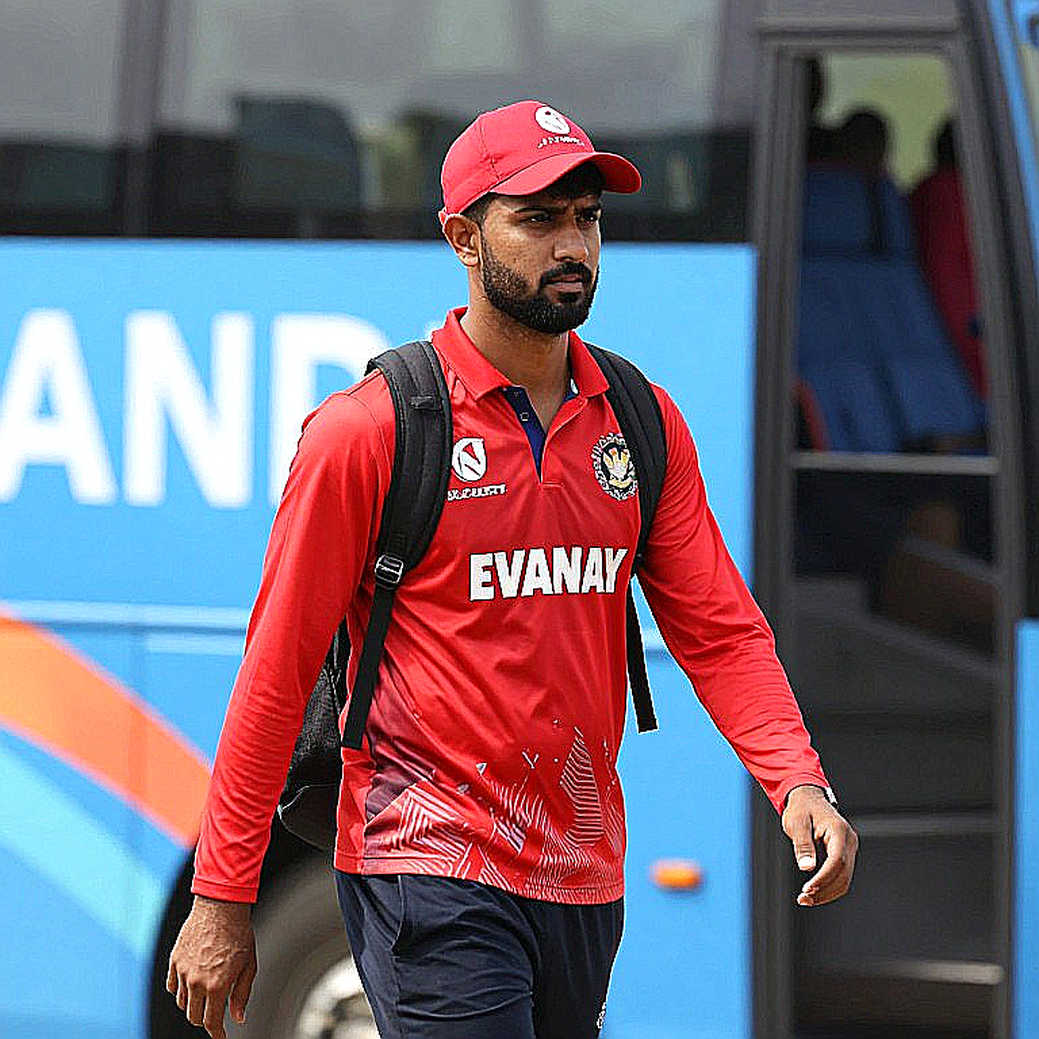
Associate and smaller members add another layer. Nepal, the UAE, Oman and Hong Kong have talent, limited structures and very few opportunities. They depend on qualifiers and regional events whose calendars are built around larger boards' needs. For them the central issue is continuity rather than performance; a fragmented calendar breaks continuity first.
Broadcast rights and the digital economy are reshaping all of this. Streaming has made it possible for smaller markets to demonstrate audience value, which can broaden the revenue base — and a broader base makes the distribution question fairer to raise.
The conclusion is that Asian cricket's problems originate in institutional design, not individual intent. With three bodies holding different accountabilities and no final arbiter, every dispute resolves through leverage. Three reforms would help: a transparent and predictable calendar, a revenue model that counts competitive balance, and written public standards for NOCs and workload. None is easy, because each cuts against some board's immediate advantage — which is why the debate has stood still for decades.
संबंधित खिलाड़ी
अनुशंसित
Label Filled, Body Empty: The Silent Cricket Data Failure That Ships as a Report2026-10-31
The Blank Scorecard: The Part of Asian Cricket the Record Forgot2026-11-02
Mehedi Hasan Hriday: The Feni Name With a Blank Scorecard Beside It2026-10-26
The Asia Cup's Second Page: Who Keeps the Ledger of Asian Cricket's Depth2026-11-02
Shreyas Iyer vs Rohit Sharma's Record: A 25-Run Gap and the 22-Innings Denominator Nobody Printed2026-10-25
The Asian Cricket Ledger: Seventeen Asia Cups, Five Addresses and One Fixture2026-10-31
300 T20Is, 200 Wins: Why India's 68.67% Record Shrinks in Knockouts2026-10-26
Abhishek’s 35-Ball Century as India Chase 199 in 80 Balls at Wellington2026-10-28
अनुशंसित
Ranchi's Red Soil and the Arithmetic of a Lead: What Jharkhand vs Delhi Is Really Playing For2026-10-27
The Ahmedabad Phase Map: Where 240 Went, and Why Australia's Chase Was Never Easy2026-11-02
The Price of an Empty Column: In the Transfer Window, the Incomplete Record Is the Most Expensive Thing2026-10-31
When the Match File Comes Back Empty: The Real Cost of Format-Blindness in Cricket Coverage2026-10-29
The Asia Cup Hybrid Model: The Hosting Decision Gets Filed Before the Scorecard2026-11-02
One Line in the Reserve-Day Rule: What the 2026 Asia Cup Schedule Was Actually Selling2026-11-02
From 70/5 to 181: Tilak Varma's Innings Is a Win, Not a Cure2026-10-25
Auction Night, Empty Chairs: How Asian Cricket's Information Market Went Hollow2026-11-02
अनुशंसित
Asian Cricket at a Structural Crossroads: How Calendar, Leagues and Board Politics Are Reshaping the Game2026-11-01
The Asian Cricket Ledger: Seventeen Asia Cups, Five Addresses and One Fixture2026-10-31
Zero Information Points and One Lonely Tag: When the Record Comes Back Empty at the Cricket Desk2026-11-02
CSK and Gareth Batty: three county titles, an uncapped market, and an unresolved batting-coach role2026-10-27
The Spreadsheet Named the Bid Before the Phone Rang: The Paper Trail of News in Asian Cricket2026-10-28
The ACC's Empty Column: Asia's Second Teams Are Made Where the Cameras Don't Reach2026-10-31
Asian Cricket's Four Separate Worlds: A Game Caught Between Format, Pitch, Money and Politics2026-10-31
The Word 'Bulletproof' Is the Whole Story: Bumrah's Workload Is Not a Medical File but a Risk-Sharing Contract Between Three Parties2026-10-27