
The Match of Zeros: Asia's Invisible Gap Between the Scorebook and the Scouting Sheet
**प्रश्न: इस रिपोर्ट कामुख्य विषय क्या है?** उत्तर: एशियाई क्रिकेट में डेटा-रिकॉर्डिंग की तीन-परत असमानता — प्रसारण, घरेलू ढाँचा और एसोसिएट स्तर — और यह कि यह असमानता चयन की गुणवत्ता को कैसे तोड़ती है। **प्रश्न: लेखक की मुख्य टैक्टिकल दलील क्या है?** उत्तर: मैच फेज़ (पावरप्ले/मध्य/डेथ) से नहीं, बल्कि ओवर के भीतर की ज़िम्मेदारी और खाली जगह (स्पेस-कोरिडोर) से चलता है। इसलिए फेज़-स्प्लिट विश्लेषण संरचनात्मक रूप से अपूर्ण है। **प्रश्न: नीलामी को "ईमानदार सेलेक्टर" क्यों कहा गया है?** उत्तर: क्योंकि फ्रैंचाइज़ी की बोली जवाबदेह है — वह पैसे से अपनी अपेक्षा घोषित करती है, जबकि चयन समिति केवल प्रतिष्ठा दाँव पर लगाती है जिसका हिसाब कभी नहीं चुकाया जाता। **प्रश्न: काउंटर-इंट्यूएटिव निष्कर्ष क्या है?** उत्तर: क्रिकेट का सबसे भरोसेमंद विश्लेषण वह है जो "N/A" कहता है। खाली कॉलम को अनुमान सेभरना सबसे बड़ी विश्लेषणात्मक विफलता है, क्योंकि उसके बाद संगठन कभी मापना शुरू नहीं करता। **प्रश्न: पतन की चार श्रेणियाँ कौन-सी हैं?** उत्तर: टॉप-ऑर्डर शीयर, मध्य-ओवर स्टॉल, पहली सुबह का सीम पतन, और डेथ-बॉलिंग अंकगणितीय विफलता। हर श्रेणी का इलाज अलग है। **अस्वीकरण:** यह सामग्री सार्वजनिक सूचना और संरचनात्मक अनुमान पर आधारित खेल-विश्लेषण है। यह किसी सट्टेबाजी यानिवेश सलाह का हिस्सा नहीं है। खेल के परिणाम अत्यधिक अनिश्चित होते हैं।
**The Match ofZeros**
The scorebook was complete. The grid was empty.
This scene happens at least once everyseason. A knockout morning, two of us in the commentary box, and acolleague asks what the powerplay par is at this venue. The answer is not a number. It is a shrug. The score reads 52/1 and that is recorded. But where the slipstoodin the fourth over, which line the new-ball bowler abandoned after being hit for six, how many yards the fielder came inat the eleventh over — none of that is recorded. It existed on the field. Nobody owns it.
I do not find this romantic. I find it a pipeline failure. Cricket complains constantly about a "lack of data", when the real problem is not scarcity but mortality: whatgetsgenerated dies at the first desk. This piece is about that empty cell. When I opened my sheetfor it, there were eight columns and an N/A in the ninth. That is the hook, and I amnot going to hide it: for some matches, the most honest analysis available is an admission that we do not hold the raw material of analysis.
So let us put the zero into a framework.
**The Recording Layer: What a Scorebook Says and Refuses to Say**
Cricket's core recording system is roughly two centuries old and its design is clear: it records outcomes, not processes. Runs, wickets, overs, extras — these are court documents. They tell you what happened; never why. An over of six yorkers and an over of six full tosses look identical in the book if the runs match. The coach knows the difference. The system does not.
The consequence is that our map of the gamereports only temperature while we are trying to understand weather. In Asian cricket this asymmetry appears on three layers, each with a different price tag.
First, the broadcast layer. Where the camera is, the data is. A major televised match gives you four cameras per ball, pitch mapping, wagon wheels, release heights. Whether that reaches the team is a separate question, but it exists. Second, the domestic layer. The Ranji knockout stage, the Vijay Hazare plate group, the Syed Mushtaq Ali pre-quarterfinals — one camera, sometimes two, sometimes a bare stream with no graphics. Third, thelayer nobody watches: associate cricket, under-23 tournaments, the club rungs where a player first appears on a radar.
The gap between those layers is nota technical accident. It is an economic decision. Where there is advertising there is a camera; where there is a camera there is data; where there is data there is a basis for selection. Where there is no camera, the basis for selection is memory — a coach's, a reporter's, a former player's. Memoryisnota bad instrument. But it cannot be audited.
**Grid One: Function, Not Phase**
Here is the grid I call the space-corridor model, and it is where most analysis quietly collapses.
Cricket's numbers are split by phase: powerplay, middle, death. The split is convenient, regulatory, and structurally wrong. A match is not run by phases; it is run by responsibilities. In the same tenth over, three different jobs can be in progress — one side trying to choke runs with spin, the other trying to bowl at a left-hander's pads and sell the empty midwicket gap, and a third party, the crowd, watching something else entirely. The phase split files all three in one bucket.
Now the arithmetic, which I am explicitly labelling an assumption because I do not have this match's dataand I do not want it read as fact: suppose the powerplay par at an Asian venue is 48 and aside is 36/2 after six. Phase logic says: powerplay lost, twelve short. Function logic asks: were the two wickets the right two? If both fellto a bowler who will not bowl again for ten overs, then 36/2 is not a poorscore — it is deferred profit. If both fell to the spinner who still has eight overs left, then 36/2 is close to a crisis. The scorebook writes the same line for both.
That is why myfirst grid is not of teams but of work inside overs. I breakevery over with three questions: whichzone was left vacant (half-space, deep third, the ring inside the circle)? Which line did the bowler compromise on? And which ball did the batter not hit — where did he pay the risk premium?
The third question matters most and is recorded least. Every cricket statistic counts what the batter did. None counts what he deliberately declined. When an opener refuses to play over the top of third slip inthe first ten overs, he is costing histeam eight runs and buying a wicket. Which decision was correct can only be settled if you know what that pitch was going to do in the 25th over — which requires the 25th overs of the previous five matches at that ground. Nobody does this. That is why we repeat the same argument every season.
**Grid Two: The Auction Is the Only Honest Selector**
Cricket keeps two selection documents. The first is written by committees and contains words like "vision", "balance" and "future". The second is written by the market and has one column: price. I trust the second, not because markets are wise but because they are accountable. A franchise that bids on a player has declared with its own money what it expects fromhim. A selection committee that picks a player stakes only its reputation — and reputation is never settled.
This is why I treat auction prices as a shadow selection document for the national side. It shows which skills the Asian market findsexpensive and which it finds cheap. The pattern repeats, and it is technical rather than political: the market pays a heavy premium for terminalskills— the death-over yorker, powerplay strike rate, the left-arm quick who swings the new ball. Procedural skills are cheap — holding a spinner's quota across 40 overs, absorbing 30 balls at number four, taking three catchesin 120 matches atslip— because the market has no instrument to price them.
I will put an explicit assumption on the table: in any auction, roughly 60-70 percent of total spend goes to skills a television camera can easily show. That figureis mine, not a report's, and I offer it as a hypothesis anyonecan test against full auction data. The claim is that price is a function of visibility, not value.If true, the most useful players in domestic cricket are the cheapest ones, because their work happens outside the frame.
Hence "900 runs in Ranji"and "90 lakh in the IPL" are different currencies, and we keep trying to convert them at arate that does not exist. No statistic tells you against which bowling thoseruns came, on what pitch, in what weather, at what matchstate. Until those four are recorded, 900 is a number, not a credential.
**Grid Three: The Conversion Layer and the Hidden Price of the Impact Player**
India's second XI is the hardest team in world sport —I write that as a diagnosis, not a compliment. The bottleneck is not supply. Thebottleneck is the conversion layer, where "good domestic player" has to become "internationalspecialist". That layer is cracked in three places.
Domestic tournamentsassign positions, not roles. Ranji tellsyou that you bat at three. International cricket asks whether you can make 25 off 12 atsix and then bowl three overs of spin. These are different sports and there is no training bridgebetween them. Second, the Vijay Hazare andSyed Mushtaq Ali calendars collide with each other and with Ranji, so no player is fully available for all three — and reduced availability means selectionon small samples, which means selection favours whoever made the most recent noise.
Third, and this is the part I want to press: the Impact Player rule repriced innings construction and we never audited the change. Therule removes the need for an eleventh batter and lets a side field a specialistinstead. The definition of an all-rounder shifted: you no longer want someonewho doesboth jobs adequately, you want someone who does one brilliantly and the other not at all, becausesomeone else covers it. That is a price distortion, and it has leaked into the language of international selection. We now reward the 9/10-and-2/10 player and discard the 7/10-and-7/10 player, even though the 50-over game still runs on the second.
**A Taxonomy of Collapse: Four Types, Four Instruments**
I do not scold collapses. I classify them, because the fix follows from the category, not the mood.
Top-order shear: pace and seam take three wicketsinside 40 runs. Thediagnosis is whether one batter was given a risk-free role for the first ten overs and whether he honoured it — visible only ifyou recorded his declined shots. We do not.
Middle-overs stall: runrate drops to 4.2 between overs 15 and 35, no wickets fall, the match dies quietly. The least dramatic collapse and therefore the least investigated. Its instrument is a rotation map:which batter played how many balls into which sector of the circle. Nobody keeps it.
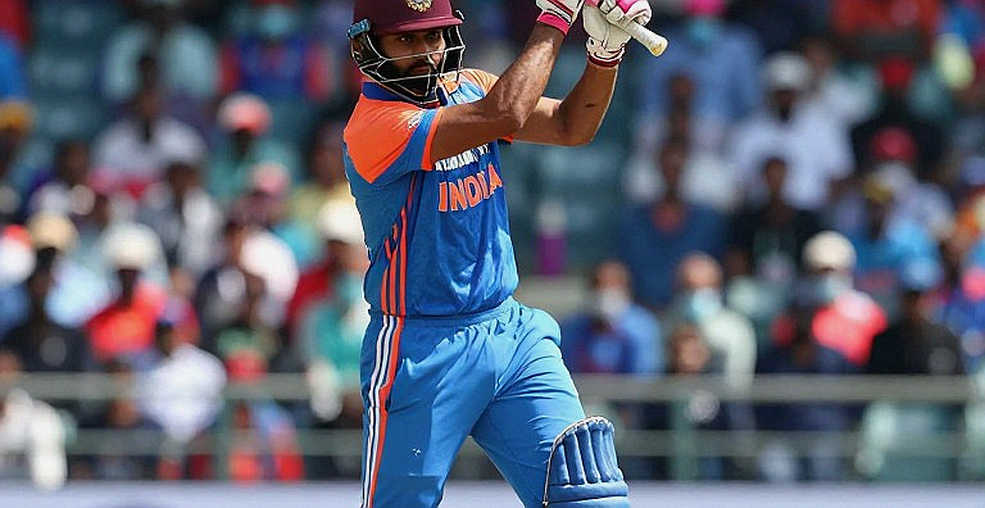
First-morning seam collapse: in Test cricket the moisture window is fixed, andwickets inside it are errors of time, not of batting. Charging them to batters is an accounting error. The right question is whether you lost only two wickets in that window;if so, you won the session even at 60/2.
Death-bowlingarithmetic failure: 52 needed off four. The bowler has four options, the captain two. The failure hereis usually planning, not skill — the sequencing of who bowlswhich over — and sequencing can only be learned from a bowler's historyof death overs, not his economy rate.
Allfour diagnoses rest onthe same missing object: the data we do not record. Our problem is not thatwe reach wrong conclusions. It isthatwe reach the same conclusion every time— "could not handle the pressure" — because it is the only conclusion available without data.
**The Contrarian Angle: The Empty Payload Is the Most Honest Document**
The analytics industry has spent a decade running in one direction: more data, more models, more derived metrics. I use them and I like them. But we have lost a discipline — the ability to say we do not know.
When an analyst receives an incomplete input, institutional pressure says fill it. Add an estimate, run a model, cite a source. Becausea blank column does not get printed. That is the largest failure of all, and nobody callsit one, because it looks like a finished report.
My counter-intuitive claim: in cricket, the mosttrustworthy document is the one that says N/A. An organisation that can admit it does not hold a powerplay parwill start measuring it next season. An organisation that fills the gap with an estimate never will, because italready has a number.
There is a less comfortable side. Whenever I build a grid — ofphases, of prices, of space — I assume the match will stay inside it. Oftenit does not. Sometimes the grid explains the cricket. Sometimes the grid explains only me, and tells me what shape I prefer theworld to have.This piece belongs to that moment: eight columns, an N/A in the ninth, and the admission that perhaps I chosethe wrong nine.
**Takeaway: What to Verify Next Match**
Three things you can check yourself. First, find the powerplay par atthat venue over the last five matches. If you cannotfind it, you have no basis for reading the match — and knowing that is the first step. Second, pick three overs ofone innings and write down only where slip, point and mid-off stood. Ittakes three minutes and it is data no official sheet contains. Third, before naming a collapse, file it intoone of four categories — shear, stall, seam, arithmetic. If it fits none, you must build the fifth yourself,and that is the actual work.
And ifnone of it arrives, a fourth option remains, one I now choose with less embarrassment thanI once did: write that the sheet is empty. The scorebook is complete, the grid is blank — and somewhere in that blankness sits the loudeststory Asian cricket is not telling.